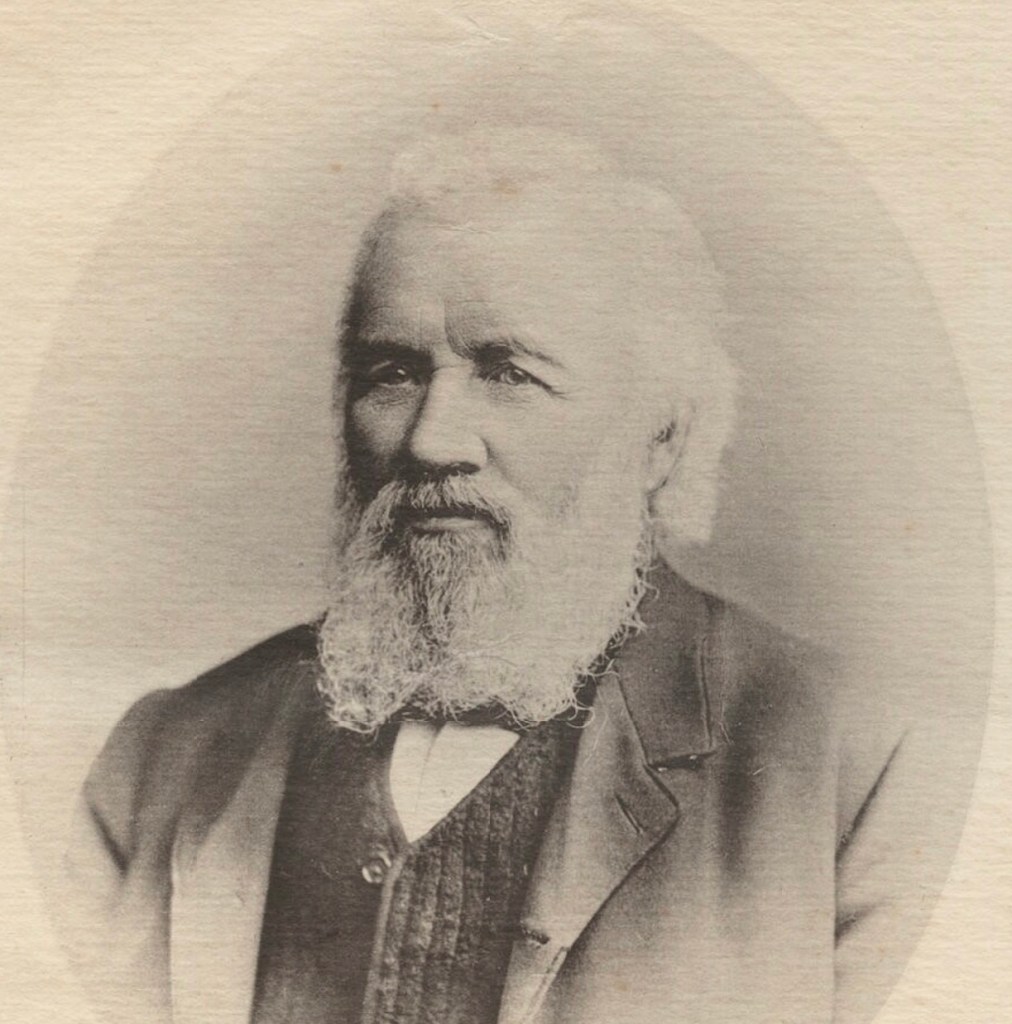
This photograph of John Glover, who lived in Heaton at the height of his fame and success, is from the National Portrait Gallery’s collection. But who is John Glover and why is his portrait in an important London gallery?
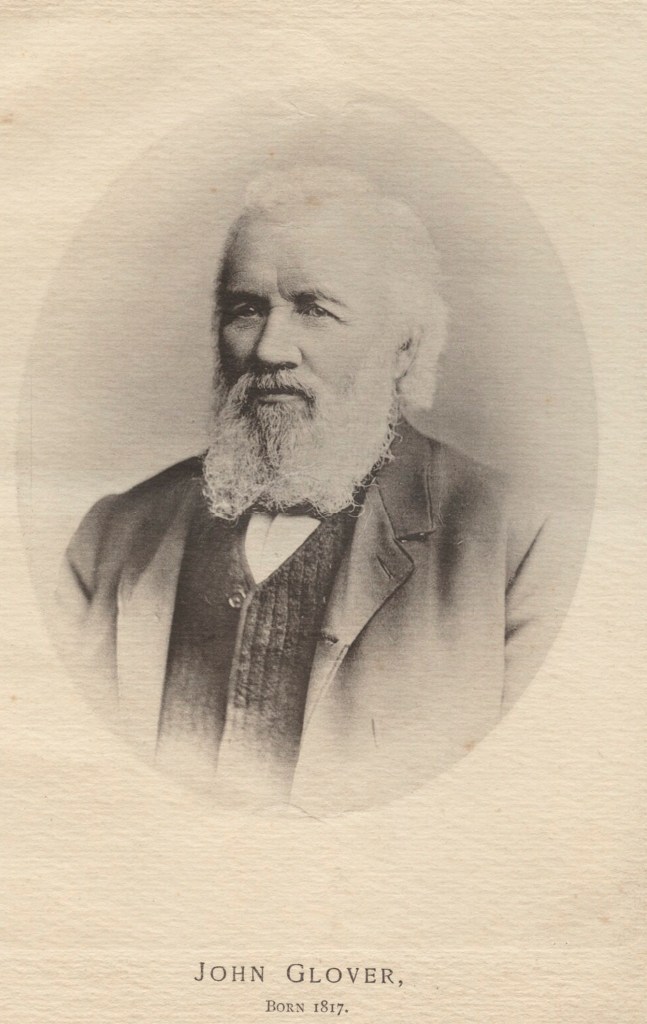
Look up ‘Glover Tower’ or ‘Glover’s Tower’ and you’ll begin to understand. You’ll find definitions and articles not only on scientific websites, in learned journals and general encyclopaedias but even in America’s preeminent dictionary, Merriam-Webster. We’ll come to what a Glover Tower is later but suffice to say that its inventor was another distinguished Heatonian, whose name has been all but forgotten in the place he called home for so long.
John Glover was born in Newcastle on 2 February 1817, the son of Robert Glover, a cooper, and his wife, Margaret.
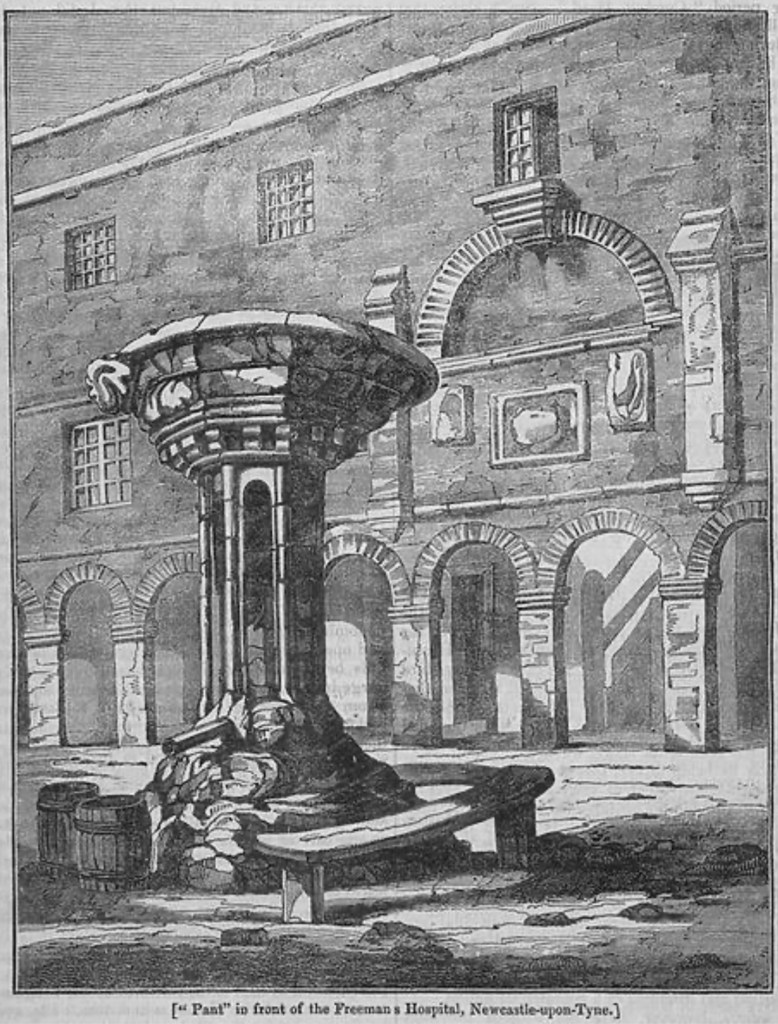
Pants
At the age of 13, John was apprenticed to a plumber. He later said that, once qualified, he was in charge for a time of the ‘pants’, the fountains which at that time supplied much of Newcastle with water from springs. It was a responsible job for a young man at a time when cholera was a big killer but not fully understood.
Glover was still a plumber at the time of the 1841 census, by which time he was 24 years old. He, his wife, Elizabeth and their three year old daughter were living in Prudhoe Street in the centre of Newcastle.
But we know that while John was mending pipes, he was also studying chemistry at Newcastle’s Mechanics Institute in Blackett Street and soon after the 1841 census took place, he began to earn his living in that field.
John Glover began work at Felling Chemical Works, part owned by Hugh Lee Pattinson, where he maintained the lead chambers of the sulfuric acid plant. It was here that he conceived the idea of a tower in which the oxides of nitrogen, the catalyst in the lead-chamber process, would be retained and returned to the process for reuse.
In 1851, he moved to Washington to become manager of the chemical works there, also owned by Pattinson. Glover’s main role in Washington was to assist in the development of the oxychloride of lead process patented by Pattinson, the works’ owner, but it was here too that the first large-scale trials took place of the tower that continues to bear Glover’s name over 120 years after his death.
In the 1851 census, Glover’s residence was given as Chemical Works, Washington and his occupation as ‘Agent, chemical manufacturer’. He was literally living on the job with his wife, Elizabeth, and children Mary, Robert, James, William, Henry and George. The four older children were being educated at home by a live-in governess, Isabella Home. A servant, Sarah Morris, also lived with the family. The Glovers were one of a number of households who lived at or right next to the chemical works with others headed by John Hume, John Bell, William Morris, all labourers; William Richardson, a smith; Robert White, a brick maker, and Jane Scott, a ‘pauper’.
Carville
He remained with the firm until 1861 when he set up the Carville Chemical Works in Wallsend with partners, W F Clark and J W Mawson.
John, now 44, and his family returned to Newcastle and were living in Elswick. Daughter, Mary, had left home to marry shipbuilder, Charles Sheridan Swan ‘of Nynei, Novgorod’ (Her husband was to die at sea in 1879 and it was Mary, unnamed in most sources, who formed a partnership with George Burton Hunter to create Swan Hunter.) John and Elizabeth’s oldest son, Robert, was himself now described as an ‘analytical chemist’. Two more children, John junior, by now eight years old, and Septimus (the seventh son, also destined to become a chemist) had been born since the last census. The family still employed one live-in servant but no governess. The younger children appeared to go to school.
At Carville, Glover and his partners manufactured sulfuric acid and bleaching powder. Sons, William and Henry, assisted their father, designing towers. It was here that the Glover Tower was perfected. ‘It consists of a series of chambers in which nitrous vitriol is denigrated and the resulting acid from the chambers is concentrated by being passed down through layers of flint, brick or other materials, against an upward flow of hot sulphur dioxide and air.’ I know, it’s pretty technical but it led to huge savings in nitre, fuel and lead besides removing the nuisance of acid fumes.
For balance, lest it be thought that Glover was some sort of eco-warrior, it must be mentioned that, in March 1872, Glover presided over a meeting of ‘alkali manufacturers situated on the river Tyne’ which wrote to the government to protest about its planned legislation ‘affecting the discharge of liquids from manufacturers into streams’. They warned of the impact of a ban on jobs and profits and called for the tidal waters of the Tyne to be exempt. Plus ça change.
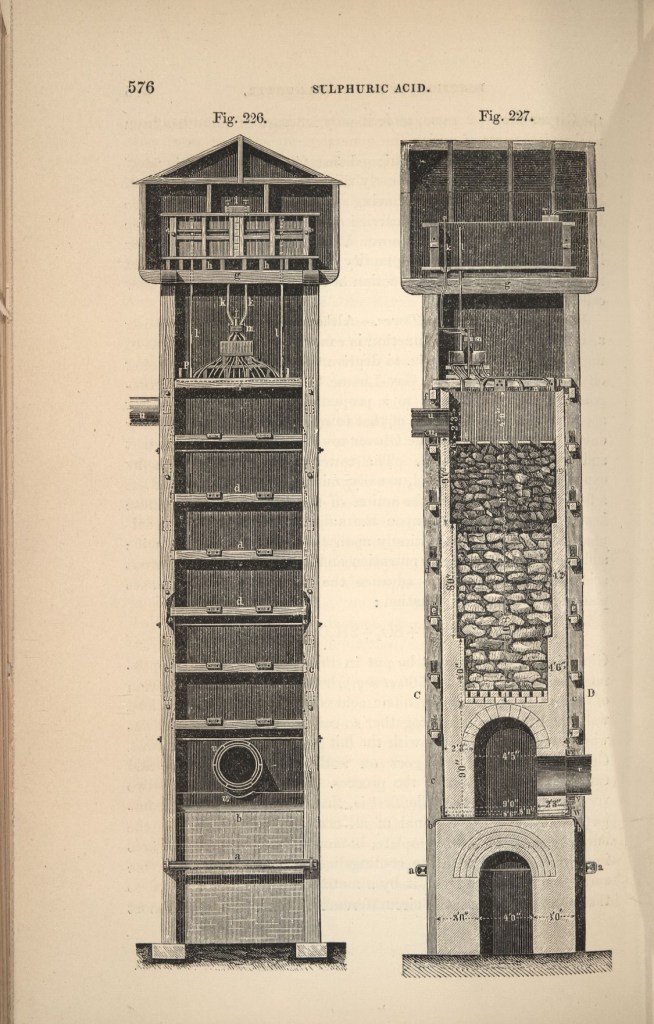
But eminent Swiss industrial chemist, Ferdinand Hurter, a world expert on the manufacture of alkali, was ‘proud to say that the first Glover tower introduced into Lancashire started on December 29 1868 under my superintendence.’
Hurter estimated in 1896 that the Glover Tower was saving the country £300,000 a year, in reduced costs of nitrates etc in the manufacture of chemicals. That sounds like no little sum but, depending how you do the calculation, it would have amounted to between £32,000,000 and £510,000,000 if we adjust for the purchasing power it would have represented. Eye watering. And that’s in Britain, in one year. The tower was used all over the world for over a century.
But Glover did not patent his invention and he derived little financial benefit, which perhaps explains why, in about 1867, he had moved to a cottage in Heaton rather than a mansion in the Northumberland countryside – or even Jesmond!
Cottage
An 1869 wedding announcement for their son, Henry, gives the Glovers’ address as Heaton Dene but this was often used as a general term for the Ouseburn Valley around Heaton and Jesmond as well as for a specific house. The 1871 census records the Glovers as one of two families at ‘Heaton Priory’. The address is listed on the census return between Heaton Hall and High Heaton. However, electoral registers consistently name the Glovers’ residence between 1867 and 1877 as ‘Heaton Cottage’. This is the house that was earlier occupied by Joseph Sewell and situated in what was later to become Armstrong Park, more or less where the Shoe Tree is now. In the census, Glover is described as a ‘Chemical manufacturer employing 170 men’. With him on census night were his wife, Elizabeth; 20 year old son, George, an ‘analytical chemist’, 18 year old John ‘a merchant’s clerk’, 15 year old Septimus, still a scholar; a cook and a general servant.
Glover was one of the founders, and in 1871-2 while living in Heaton, President of Newcastle Chemical Society. He then served as a vice president until 1882 and, after it became the Newcastle section of the Society of Chemical Industry that year, he continued to take an active interest and was described as ‘one of [that body’s] most distinguished members’. At around the same time, he was present at a meeting, chaired by Sir William Armstrong, which called for for a College of Science to be opened in Newcastle.
A friend for over half a century recalled Glover’s own brief formal education but said ‘I have never known a man more devoted to the acquisition of knowledge or more successful in attaining it.’
The Glovers were still living at Heaton Cottage in 1879 when Sir William Armstrong gifted the land on which it stood to the people of Newcastle.
New Terrace
At that point, the Glovers moved but they didn’t go far. They were one of the first families to set up home in Jesmond Vale Terrace, a very desirable row of houses which was still in the process of being built opposite the new parks and was as close as they could possibly be to their old ‘cottage’. In the 1881 census and the early electoral registers, the houses on the still developing terrace weren’t numbered so it was difficult to establish which theirs was. However, from about 1886, the Glovers’ address was usually given as 1 Rothbury Terrace and so it appears that the family lived for about ten years in what is now Heaton Mosque. The house has been much added to but the building still has entrances on both Jesmond Vale and Rothbury Terraces.
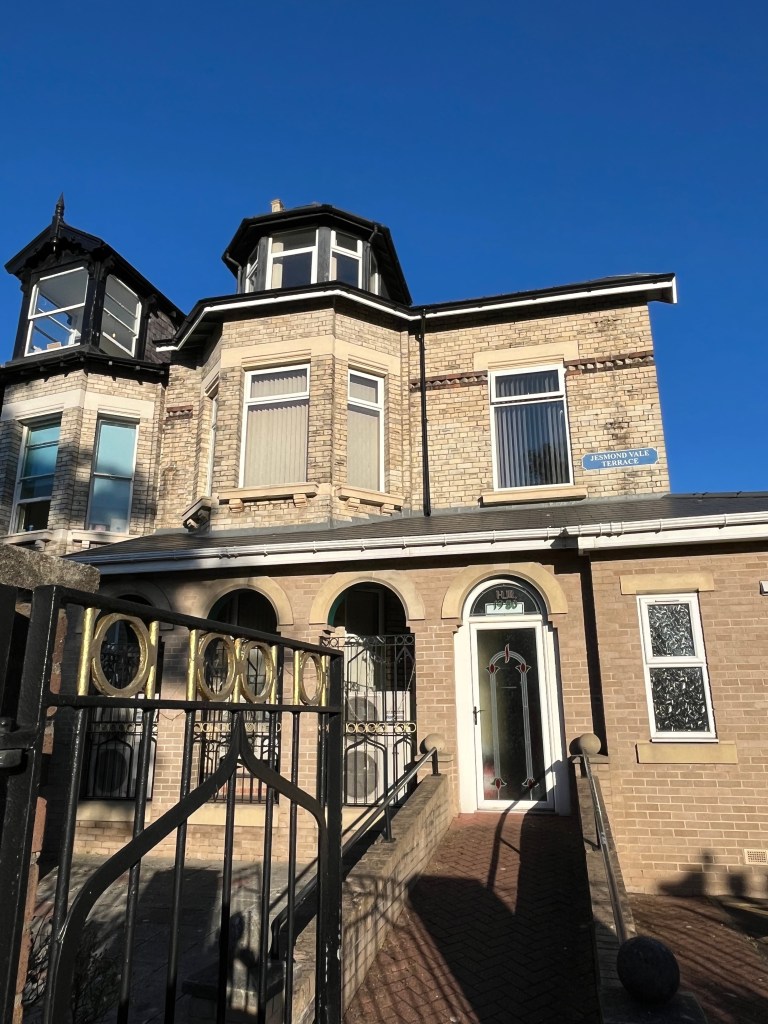
In the Glovers’ house, alongside John on census night, 3 April 1881, was his daughter in law, Sarah, Septimus’s wife, and her young son, also called John, along with 2 servants. We don’t know where Elizabeth, John’s wife or Septimus was. John is described as an ‘alkali manufacturer employing 180 men’.
However, all was not well with the business. The company used the Leblanc process to make alkali but competition from firms using the newer Solvay process, including Brunner, Mond and Co in Gateshead, led to the closure of the Carville works in 1882.
We know a little about his interests outside work. ‘He read extensively, was a keen controversialist and loved debate… [his] enthusiasms ranged over the widest regions of science, of religion and of social economy.’ He was a member of the Lit and Phil and Newcastle Historical Society.
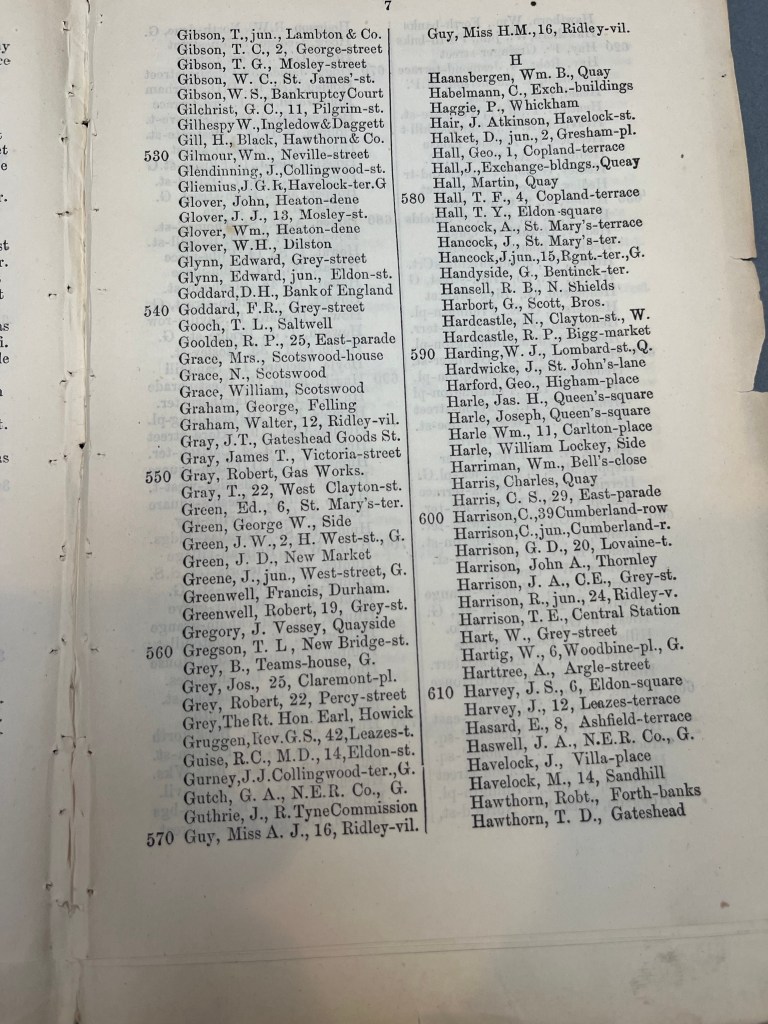
By 1891, John had retired and he and Elizabeth had moved to Jesmond. It was there that John died on 30 April 1902, aged 85. He was buried in Elswick Cemetery,
The Newcastle Daily Journal described Glover as ‘a venerable and distinguished native and citizen of Newcastle’ and said that ‘his name would always be associated with the manufacture of sulphuric acid, the most important of all the acids inasmuch as in one form or other it is employed in nearly all the industries. The time was when about one-half of the sulphuric acid produced in the United Kingdom was manufactured on Tyneside, and in bringing this about Mr John Glover played a most important part’
It also commented ‘Mr Glover had lived so long in retirement that he was but little known to the present generation; but he was in his day, a famous chemist and the small company that gathered around his grave included several representatives of the science and industry of chemistry.’
But Glover had not patented his invention – he wanted the whole world to benefit and freely explained its operation to anyone – and so he derived little financial benefit from it. He left just £482 5s 1d in his will.
Nevertheless he supported charities to the end. A wreath at his funeral, sent by ‘Captain and Mrs Raynham and the boys of the Wellesley Training Ship’ carried a message ‘In affectionate remembrance of one who devoted so much time and labour to their interest.’
He was said to have been a genial, modest man and was described in his obituary as ‘of so serene a nature, all the qualities of human goodness were so mixed in him, and his resources of mind were such, that no one could have been less hurt by the blows of unkind fortunes than he’.
Medal
However, his achievements WERE recognised by his profession during his lifetime. At the 15th annual meeting of the Society of Chemical Industry on 15 July 1896, John Glover, then aged 79, was presented with the society’s first ever gold medal ‘for conspicuous service to applied science’.
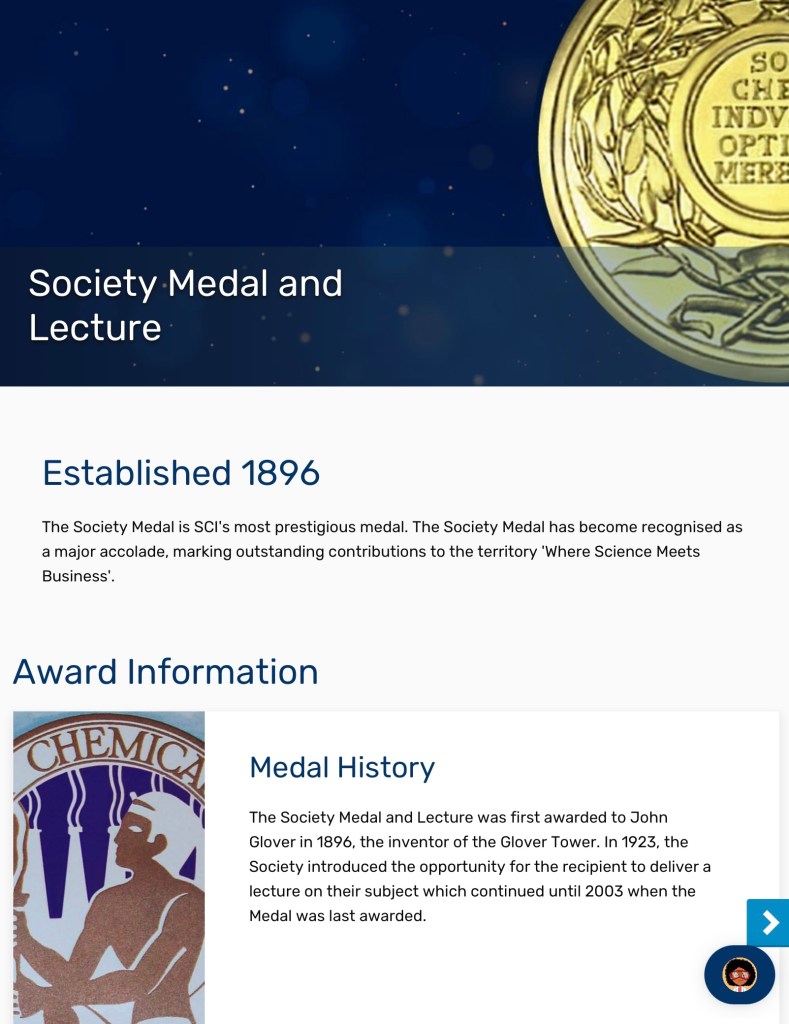
The learned society’s medal is still considered the major accolade ‘in the territory where Science meets Business’, with its list of winners a ‘Who’s Who?’ of the highest achievers in applied science. It is perhaps at this time that John Glover went to the photographic studio of James Bacon on Northumberland Street and had his portrait taken. Certainly the above photograph was used in the subsequent press coverage.
The Society of Chemical Industry’s most prestigious medal was last awarded in 2003 to Sir David Lane, eminent immunologist and cancer researcher, who discovered p53, crucial to the prevention of many cancers.
Two of the medal’s other early winners are particularly well known to those of us on Tyneside: Sir Joseph Wilson Swan, inventor of the incandescent light bulb (1902) and Sir Andrew Noble, ballistics expert (1908). An appreciation of Glover in the ‘Journal of the Society of Chemical Industry’ written just after his death ‘His inward light never failed nor the delightful buoyancy of his spirit’ was signed JWS, surely Joseph Wilson Swan – especially given the metaphor! And Sir Andrew lived only a mile and a half up the Ouseburn from Glover in Jesmond Dene House.
In fact, it is notable how many of the medal’s winners, like Lane, Swan and Noble, were knighted during their lifetimes for their achievements and subsequently have had statues erected in their honour in British towns and cities or blue plaques placed at addresses identified with them; have featured on postage stamps or been immortalised by the nation in some other way.
Indeed in its coverage of his presentation, the ‘Newcastle Weekly’ correspondent wrote (on 12 September 1896): ‘It is pleasing to think, however, that Mr Glover is enabled to live in comfortable retirement, rich in the fewness of his wants, rather than in the abundance of his means. But he has not received the rewards that are properly due to his constructive genius – a fact which the government of the country ought to notice, as the nation has received the benefit.’
But it never did.
However, the story of the Society of Chemical Industry medal doesn’t end there. In 1958, almost 60 years after John’s death, the Glover Memorial Lectures were established at Dickinson College, Carlisle, Pennsylvania in memory of John, his son Henry and grandson Lester. Henry had emigrated to the USA in the 1880s and, like his father, was a chemical manufacturer. Dr John Yeagley, a prominent physician from York, Pennsylvania, presented what appears to be a solid gold replica, made by the Royal Mint, of Glover’s original award by the Society of Chemical Industry along with 18 ‘very fine gold plated replicas’ which were to ‘be used for the Glover lecturers as the years go by’. The solid gold version is still held by the college.
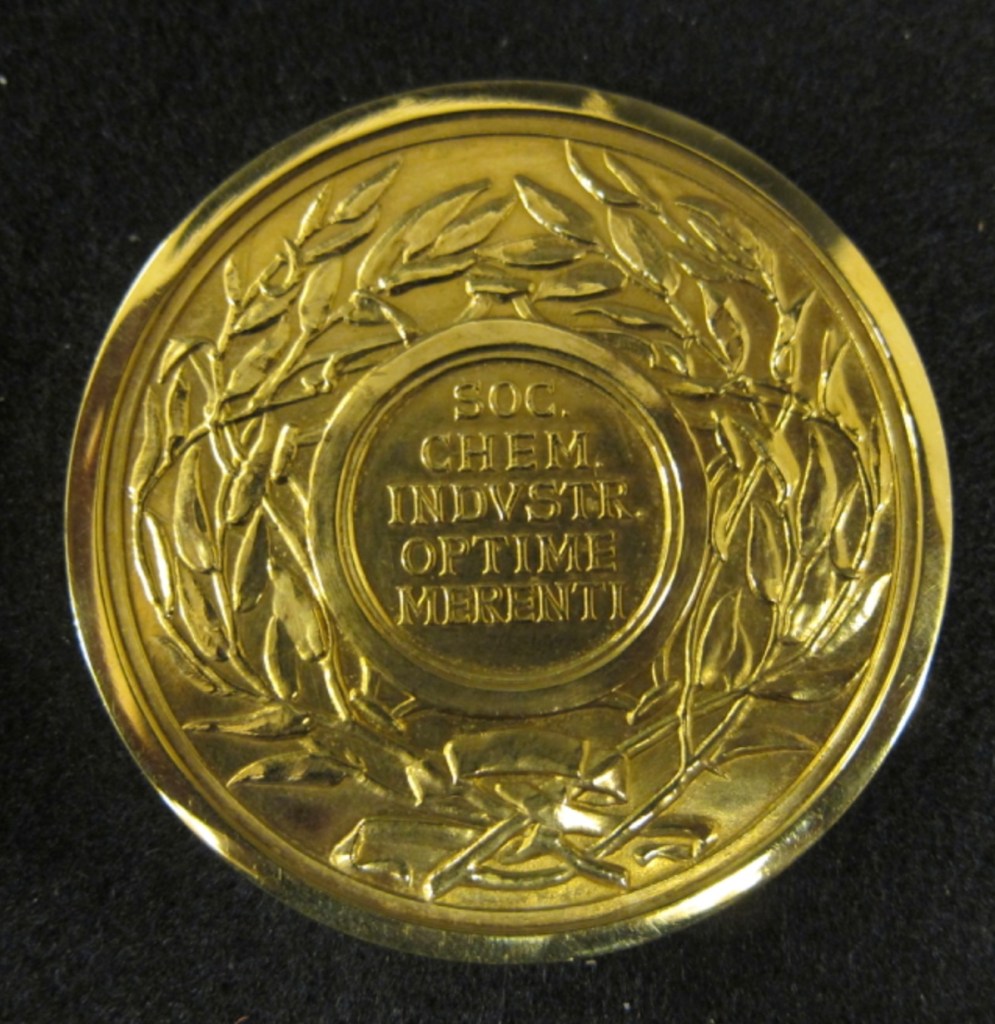


A 1961 letter on the college website from John Yeagley’s brother Henry (John had died in 1959) explains that as no suitable box was available in which to present the first replica, they had used the box belonging to the solid gold medal and would need to obtain a new velvet lined box for it as well as boxes for the other replicas.
The lectures continue to this day most recently on the topic of climate change in 2023.
Here the name ‘Glover’ lives online and in those scientific journals and encyclopaedias, at some locations in Washington, Co Durham and elsewhere (most notably Glover Industrial Estate on Tower Road, Washington) and at the Society of Chemical Industry but he has been largely forgotten outside his profession, something he has in common with a later Heaton chemist, Neil Bartlett, another genius with humble origins, a modest demeanour and a generosity of spirit. We remember them both.
Can You Help?
If you know more about John Glover or have photos to share, we’d love to hear from you. You can contact us either through this website by clicking on small speech bubble immediately below the article title or by emailing chris.jackson@heatonhistorygroup.org
Acknowledgements
Researched and written by Chris Jackson of Heaton History Group. Thank you to the National portrait Gallery for permission to use the photograph of John Glover’.
Sources
Ancestry, British Newspaper Archive, Wikipedia and other online sources
Obituary of John Glover in ‘Today in Science History’
The Oxford Dictionary of National Biography
The Resources of the Lit and Phil (including their membership list and the ODNB) and Newcastle City Libraries (trade directories and electoral registers)