

Few of Valentine Orde’s neighbours on Boundary Gardens in High Heaton knew much about the ‘retired’ music teacher’s past – until they watched the ‘colourful and moving portrait’ made by Tyne Tees when she was 92 years old. And even then, much about her long life and distinguished career remained untold.
Valentine Evelyn Orde was the daughter of Winifred Mary and her husband, Lieutenant Colonel William Orde, on 14 February 1889, hence her first name. She had three older brothers, Charles William, who would become a diplomat and county councillor; John Barwick and Percy Lancelot; plus an older sister, Violet Isabel, and later, another sister, one year Valentine’s junior, Hyacinth Eleanor.
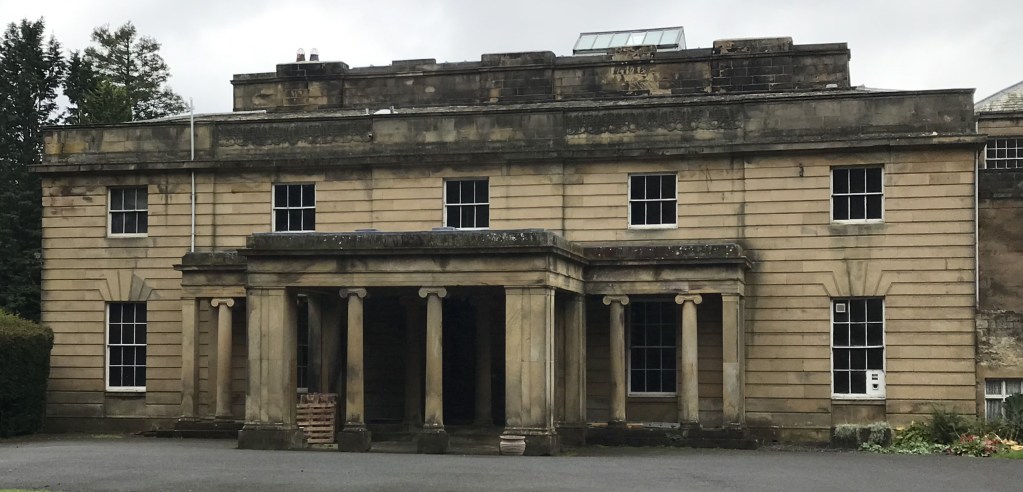
The Orde family were descended from Simon de Ord, who came to England at the time of William the Conquerer and, in the eighteenth century, Nunnykirk Hall, Northumberland became the family seat. At the time of Valentine’s birth, her family were living in Grindon Farmhouse near Norham on Tweed but by the time of the 1901 census, they had moved to the family’s 43 roomed seat near Netherwitton. William, Winifred, 22 year old Valentine and her older sister, Violet, were in residence along with eight servants.
Music
The Ordes were a musical family and, aged 10, having already being taught the piano by a governess, Valentine began cello lessons. She was clearly gifted and so, aged 15, she left the family home, along with a governess chaperone, to study at the Royal Academy of Music and then went on to study abroad under the tutelage of well known cellists of the time. But she still spent many vacations at home in Northumberland.

The first record we have found of Valentine performing date from 1905, when she would have been 16 years old. The Orde family, as the Nunnykirk Quartet, put on a concert for the Hartburn Habitation of the Primrose League, in Netherwitton Schoolroom. Her father was a member of the league.
A 1907 report in ‘The Era’ of a Royal Academy of Music concert mentions Valentine’s accomplished cello playing twice.
War
After the outbreak of World War 1, a ‘Grand Patriotic Concert’ was held at Morpeth Masonic Hall in aid of Queen Mary’s soldier’s fund. Among the many artists was Valentine playing solo cello.
Sadly, in 1917, Valentine’s brother, John was killed in action and this must have motivated her to join actress Lena Ashwell’s YMCA Concert Parties, the first large-scale entertainment organised for troops at the front.
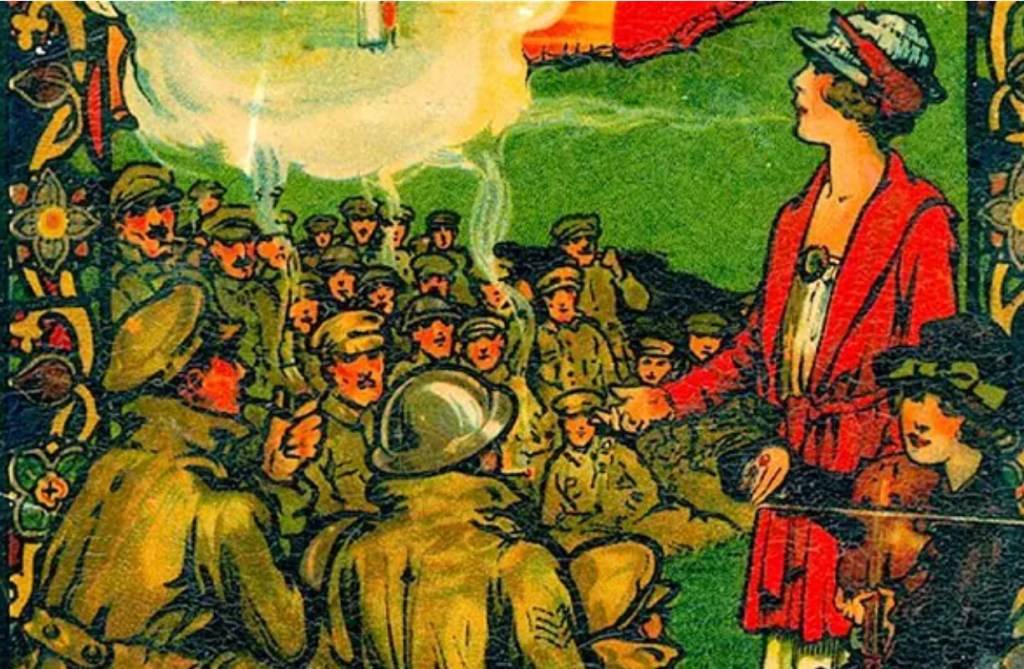
(Incidentally, Lena was born on board HMS Wellesley at North Shields, while her father was its commander). Valentine travelled to France a number of times, recounting how in the winter it was difficult to play the cello with ‘frozen’ fingers.
After the war, Valentine became a professional musician. Between 1921 and 1924, she was a member of the London Wayfarers Quartet, the aim of which was to take classical music to a wider public by touring and performing at village halls and schools throughout England. During the 1920s and 30s, while based in London lodgings, she could often be heard on the radio and seen at venues throughout the country.
And, in 1924-5, she helped fellow cellist, John Barbirolli set up the chamber orchestra that was to bear his name. Soon after, incidentally, in September 1926, he made his debut as a conductor – in Newcastle.
Safety
But the world was at war again from 1939 and Valentine returned to the comparative safety of Northumberland. In the 1939 Register (an emergency census taken at the beginning of the war), she was living at Mitford Hall.
She soon became fully involved in the musical life of the north-east, co-founding the Wansbeck String Players along with Mrs Osbaldeston-Mitford, secretary of the Newcastle Symphony Orchestra.
Valentine was the conductor of the new (to begin with all female) ensemble, which performed in order to raise money for ‘worthy causes’. Mrs Mitford played cello and the other players in 1940 were Lady Joicey and ‘Mrs Sample of Bothal’. Their debut concert was in aid of ‘moral welfare work in Morpeth and Ashington districts.’
There are many records of its playing well-attended concerts before appreciative audiences throughout Northumberland eg at Hexham Abbey, Rothbury’s County Hotel and Durant Hall and the King’s Hall, Newcastle.
Valentine was also by now very well-known and respected as a teacher of the cello. The ‘Independent’’s 1997 obituary of Antonia Butler who had gone on to have a distinguished career, playing, for example, at the Proms and with many of the well-known instrumentalists of her day, credits Valentine Orde with being her first cello teacher from the age of ten.
Before the end of the war, Valentine began living at Bothal Castle with William Sample and his wife Anna Hilda, who was (as already mentioned) a member of the Wansbeck String Players. In the 1939 Register, William was described as a ‘land agent’ and their daughter a ‘chicken farmer’. Hilda, as she was known, was said to be an accomplished cellist and Valentine her ‘musical companion’. When William died in 1950, Valentine continued to live with Hilda at the castle.

Perfect
The Wansbeck String Players meanwhile seems to have morphed into the ‘North Country String Players’ with Valentine still conducting but now with men, who were returning from the war, admitted and, between 1949 and 1952, Cyril Perfect its leader. Cyril Perfect was at that time County Music Organiser to Northumberland Education Committee and so, like Valentine, involved in nurturing young talent. He was also the father of Fleetwood Mac’s Christine McVie.
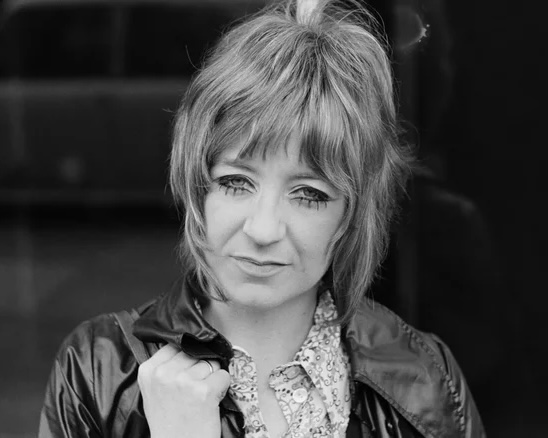
The family lived at 12 Sefton Avenue, Heaton in the early 1950s with Christine attending Chillingham Road School. In fact, Christine recalled later that she studied classical music from an early age reaching Grade 7 on piano. ‘My dad aspired to be the first violinist in the orchestra. His dad played the pipe organ at Westminster Abbey.’ Who’s to say that Valentine Orde and Christine McVie and her dad didn’t busk with Jimmy Hendrix on Chilli Road!
In 1954, Valentine was also described in the press as ‘controller and conductor of the Northern Ladies String Orchestra’.
Sinfonia
It was natural then that Valentine’s expertise as an organiser, performer and teacher would be sought by a group, led by Michael Hall, which was attempting to establish the north-east’s first professional orchestra and the country’s only permanent chamber orchestra. The ‘Sinfonia Orchestra’ as it was first called ( to be renamed Northern Sinfonia the following year and, from 2013, of course, Royal Northern Sinfonia) was founded in 1958. Valentine Orde became a member of the management committee and also a patron. It was said that without her financial help the orchestra might not have survived.

And musically she was invaluable too as were her connections. Another of her distinguished protégés, Kenneth Sillito, played violin at one of the orchestra’s first concerts, and, in 1960, a scratch string quartet comprising Kenneth Sillito, Valentine Orde, Michael Hall and Anthony Cullens put on a concert to raise funds for the fledgling orchestra.

In fact, she was later described as ‘the woman who transformed the Northern Sinfonia from an ad hoc body to a world famous orchestra’.
High Heaton
And now the story returns to Heaton. Not only did Northern Sinfonia rehearse here at that time in the new People’s Theatre Art Centre but High Heaton became, in 1964, the home of Valentine Orde herself.
After Hilda Sample’s death, the 14th century Bothal Castle was leased. Valentine, who had previously lived in the grand surroundings of Nunnykirk Hall, Mitford Hall and Bothal Castle moved to a modest semi-detached property at 11 Boundary Gardens, High Heaton. She seems to have liked it for she lived in the same house for the final almost 20 years of her life, continuing to perform into her eighties and to teach into her nineties.
Appeciation
In 1969 Valentine was awarded an OBE for services to music in the north-east in a New Year’s Honours List, which also included OBEs for entertainer, Vera Lynn and boxer, Henry Cooper.
Locally, in 1979, Northern Sinfonia for whom she had done so much, especially in its early years, held a 90th birthday tribute to her. The guest list was 120 strong, with people attending from all over the UK and Ireland.
And the following May, she received an Honorary Master of Music Degree, as part of the Newcastle 900th birthday celebrations. Other notable recipients of honorary degrees at the same ceremony included High Heaton born chemist, Neil Bartlett, and engineer and physicist, Tom Bacon, who worked for C A Parsons, both of whom we have written about previously.
Documentary
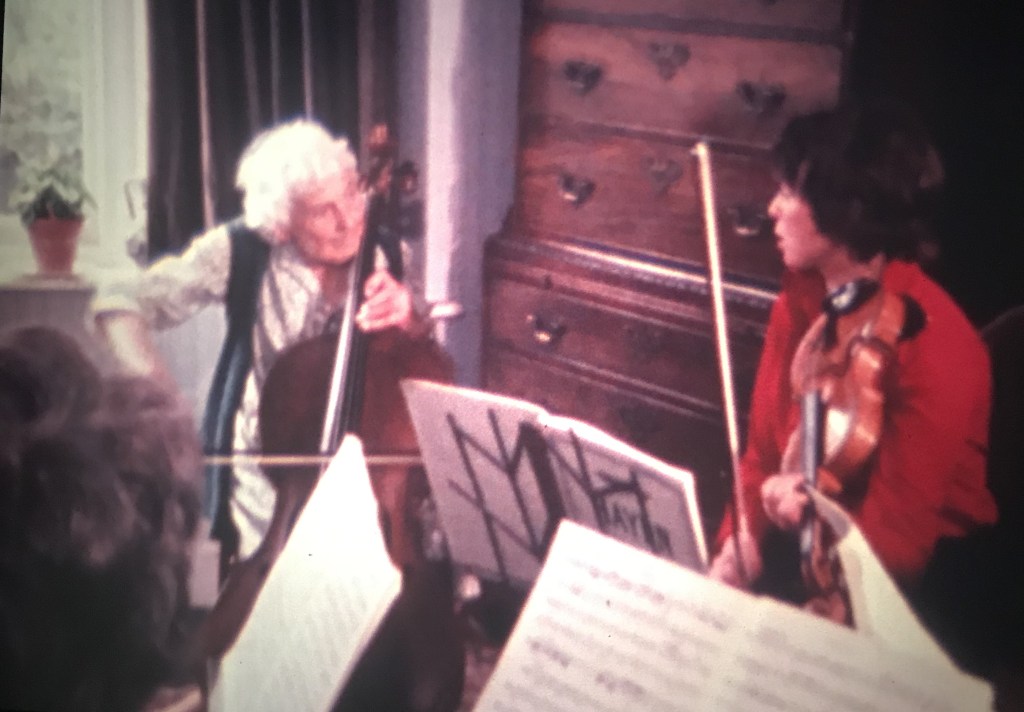
In 1980 Tyne Tees Television made a documentary ‘Valentine’s Day’, described as a ‘colourful and moving portrait of Valentine Orde, aged 91, remarkable lady of music, who meets again her most famous pupil, miner’s son, Kenneth Sillito, leader of the World famous Gabrieli Quartet’. The programme won the Royal Television Society Award for the best regional documentary of the year. In the documentary Sillito and his Gabrieli String Quartet performed the music he played at his first audition with his future mentor, Valentine Orde.

Sillitoe wrote, in Chapter 2 of his memoirs (‘Enter Valentine Orde’), about the role Valentine Orde played in his musical education. Just after his 9th birthday, he had impressed her with his violin playing at a music festival in Ashington. She helped his parents find him a suitable teacher and invited Kenneth to Bothal Castle to play in string quartets with musicians vastly older than himself. He would be seated in the leader’s chair and he remembers that he was treated so well that he never felt out of place in this highly cultured, adult world. Orde was Kenneth’s musical mentor for a number of years. She even taught him to drive in her Morris Minor so that when he became a professional musician, he ‘would be able to get around the country easily’. He dedicated his autobiography ‘From the Leader’s Chair’ to her.’

While researching this piece, Arthur located a copy of the film at the North East Film Archive. He was thrilled to be able to listen to Valentine describing her life and hear the Gabrieli Quartet play for her.
Legacy
Reflecting at the age of 91 on her ‘wonderful life’ , she regretted only that she had been ‘born a hundred years too soon’ and that it was now perhaps a little too late to avail oneself of modern opportunities.
She said that she believed that she was a far better music teacher at 90 than at 80 and that she was still learning, adding that ‘one is never without music’. She hoped only that she never became deaf.
Valentine Evelyn Orde died on 9 December 1983 at her High Heaton home. In January 1984 Northern Sinfonia members played at a memorial service held in her honour at St Nicholas’s Cathedral and, in February, a Northern Sinfonia concert, in which brilliant cellist Stephen Isserlis was making his debut with the Sinfonia, was dedicated to her. The Valentine Orde Award for promising string players was established at Newcastle University.
As well as the many pupils she taught and fellow-musicians she supported, her great legacy is the world-renowned orchestra that still has its home on Tyneside, the now Royal Northern Sinfonia.
Can You Help?
If you know more about Valentine Orde or have memories or photos to share, we’d love to hear from you. You can contact us either through this website by clicking on small speech bubble immediately below the article title or by emailing chris.jackson@heatonhistorygroup.org
Acknowledgements
Researched and written by Arthur Andrews of Heaton History Group. A special thank you to Vin Arthey and to the staff of the North East Film Archive, without whom Arthur would not have been able to view the Tyne tees documentary ‘Valentine’s Day.’
Resources
Ancestry
British Newspaper Archive
Find My Past
‘From the Leader’s Chair’ / Kenneth Sillito; Austin Macauley, 2019
Newcastle City Library
Newcastle Literary and Philosophical Society Library
North East Film Archive at Teesside University
and other online sources


We received have the following from fellow musician, Noel Broome:
Re Valentine Orde OBE
My late wife -Marion née Hillier) – whom I Hd met in the Hallé Orchestra- and I were privileged to know Valentine Orde over many years, after we moved from London to join the newly-formed Northern (now Royal) Sinfonia, Marion as sub-leader.
One early invitation to meet and make music together came whilst Valentine, and her companion, Hilda Sample, were living at Bothal Castle. Later, after she had moved to the modest semi in Boundary Gardens, Heaton we were frequently invited to play chamber-music with her and friends. One particular evening stands out in my mind: we arrived to find we were to play the wonderful piano quintet by Brahms, with a young up and coming pianist by the name of Simon Rattle.
As has been said, Valentine was a driving force behind the formation of the NSO in 1958: I doubt if anyone will ever know the extent to which she supported this new venture in the North East.
We remember Valentine with great affection. I have a personal debt of gratitude, for a gesture which changed the course of my career. It was whilst I was away on tour in South America with the NSO, as a violinist, that I received news that Valentine wished to present me with the fine viola she owned and which I used to play at her musical soirées. This wonderful gift had a direct bearing on the rest of my professional life: it enabled me to free-lance, not only with the NSO, but also with ensembles in Scotland and elsewhere. In 1976 I gave a solo recital with the instrument on Radio Three. Some five years ago I had to stop playing and I passed the instrument on to my brother-in-law’s grandson, who was studying at the Royal Conservatoire in Scotland.
It has been rightly pointed out that one of Valentine’s greatest achievements lay in the inspiration she gave to other musicians, particularly as a teacher of her instrument, the cello. In fact, after her passing, I was entrusted with a large envelope containing many pages of wisdom on cello-playing. If any aspiring cellists would like to see this I would be delighted to pass it on to them.
Would it be possible to view the film Tyne Tees TV made of distinguished cellist Valentine Orde ?
Hi Lucy,
It’s available to view at the North East Film Archive at Teesside University.
Chris (Secretary, Heaton History Group)
Oldheaton,
Your post on Valentine Orde fits in with a history project I’m working on “Netherwitton Village Remembered History Project”
We have already uploaded some of the Orde family information.
Would it be ok to share your information to the FB group and add to the Netherwitton-Village website with a link to your original and credit give to yourself?
Yes, of course. We have emailed you to confirm. Chris (Secretary, Heaton History Group).