

As we saw in Part 1, Stannington Avenue was built in 1890 as part of a rapidly expanding Heaton area of Newcastle. Offering space, light and air, it was one of the new terraces constructed to attract a burgeoning Victorian middle class. So what kind of people chose to live in the street?

Wards Directory for 1891-1892 shows that the first residents had a variety of occupations, including vicar, chemist, engineer, stationer, butcher, commercial agent and of course gentleman. If they followed the general pattern in Victorian society, most of them would have rented rather than bought their homes. Interestingly, the entries for nos 9 to 11 all simply showed a ‘Mrs’ as titleholder – by 1894 every house from no 8 to no 12 had ‘Mrs’ on the public register, with no other information. Why this should be I can only guess. Can anybody suggest a reason?
The first resident in our house was an elderly widow, one Annie Sill, who moved into the street in 1890. I could not find out whether she owned or rented the property. Certainly as the widow of a moderately wealthy man (manager of a chemicals factory), who had moved from a larger house on Heaton Road, she was probably well able to purchase this, her final home.
Born Anne Toward in Gateshead in 1822, she married John Sill, also from Gateshead, of 12 Northumberland Square, Tynemouth on 18 October 1852 at St Stephen’s Church in South Shields. The couple set up home in Tynemouth and went on to have four children. Sadly only the third child, Thomas Toward Sill, lived long enough to see the 20th century, living until 1908. His brothers and sister all died young, aged 14 years, five years and six months.
In the 1861 census, John and Annie Sill were living in Wallsend village with their surviving son Thomas Toward Sill aged 4, and a lodger or servant, Elizabeth Kirkup. Yet within ten years John and Annie had moved and were living with their 14-year old son Thomas in Tynemouth. By this time, 1871, John was clerk to the company, A C Manufacturers (possibly Allen Chemical Manufacturers) in Wallsend.
John must have been a capable man, because by 1881 he was secretary and manager of the company, He was also a representative for the Heaton Funerals Board, and the couple were living at Albert Villa, 44 Heaton Road, a stately stone-built Victorian semi built in one of the first phases of Heaton’s expansion northwards from Byker. The 1881 census shows Albert Villa as occupied by John (59), his wife Anne (58), their son Thomas Toward Sill (24) and a servant. Annie also seems to have been a clerk to her husband’s company.
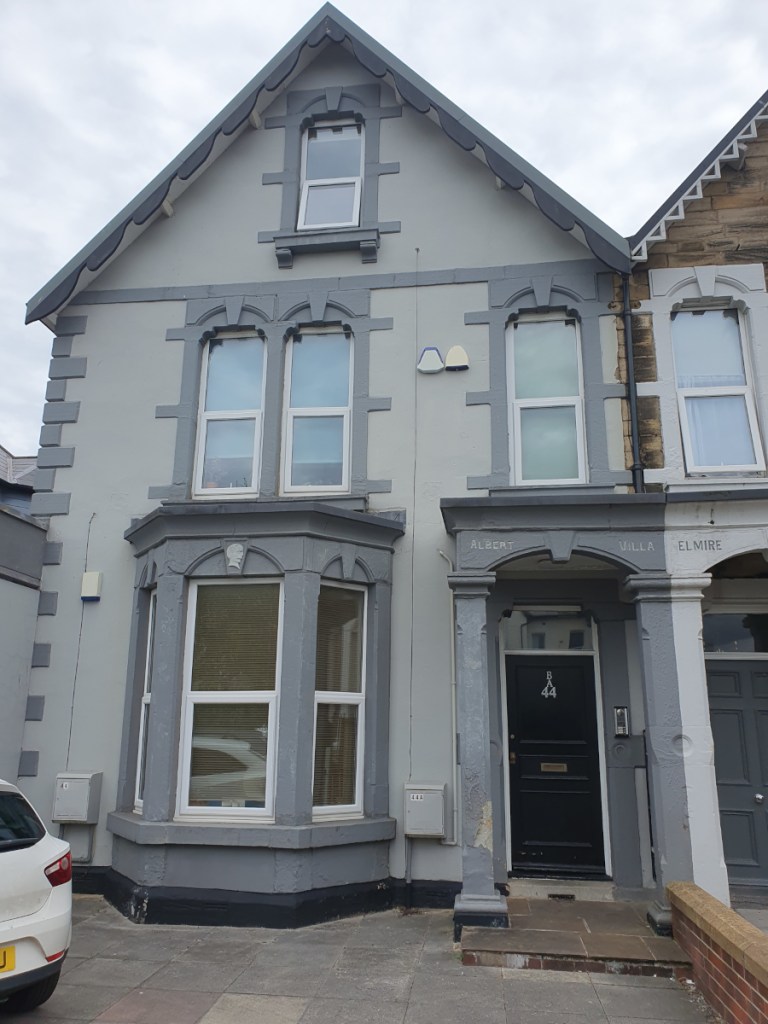
northwards. Copyright: Philip Hunt, 2025
How would John have travelled in 1880 from his home to the chemical business he managed in Wallsend? He could have taken a horse-drawn tram down Heaton Road to catch the train at Byker, or if he could afford a little more luxury he would have taken a horse-drawn Hansom cab.

for the horse-drawn tram. Courtesy William Embleton Collection.
He would have then a caught a steam train of the Newcastle and North Shields railway at Byker Platform, then an unadvertised halt (until 1901) in Roger Street, Byker. Boarding his carriage, he would travel down the Riverside branch of the line to Willington Quay (this riverside route was electrified using the third-rail system in 1904, and is now the Hadrian’s Way footpath). Probably he would have enjoyed a seat in first or second class in a carriage with doors, rather than in a third-class carriage where they were considered unnecessary.
Sadly John died in December 1881, leaving £1932 (c. £200,000 today according to the Bank of England inflation calculator), and was buried at Church Bank Cemetery in Wallsend. His widow Annie is the only person mentioned in the will, which begs the question of why their son Thomas Toward was not mentioned – had he fallen out with his father?
In any case it seems that by 1882 the newly widowed Annie Sill was left fairly comfortable, since after leaving Albert Villa she was able in 1890 to move into one of the homes in the brand-new Stannington Avenue. Perhaps Albert Villa contained too many memories, or perhaps she simply wanted a view over the park.
In any case she stayed in the Avenue for the remaining six years of her life. The fact that her name was listed in Ward’s Directory for those six years suggests that she remained a fairly influential woman, perhaps still with a role in the company. On 7 December 1896 she passed away aged 74, and was buried with her husband at Church Bank Cemetery.
Rise of cement manufacturing on the Tyne
What about her only surviving son Thomas Toward Sill? He left home after his father died, and on the 28th December 1885 married Barbara Palmer at St Michael’s church in Byker. By 1891 he was living at a large house called The Villa, The Green, Wallsend. Like his father he worked in the chemical industry, in his case as manager of the Wallsend Cement Works (a successor to Wallsend Chemical Works, itself a successor to John & William Allen Chemical Manufacturers of Wallsend).
Wallsend Cement Works was known for manufacturing clinker, the basic material for cement, in Willington Quay. This area of Wallsend seems to have been an important location for cement manufacturing. Another of the businessmen involved in cement production here was Charles Potter of Heaton Hall, right up until the early 1900s.

The area, being close to the mouth of the river Tyne, would have been convenient for colliers returning from London laden with a ‘return-load’ ballast, enabling them to tie up alongside the quay and dump the ballast. Once unloaded and ready for a new cargo, the ships could stand off into the river, to await loading with coal from the keelboats coming downriver from central Newcastle.
However this ballast, which was often chalk mined relatively cheaply in the Thames estuary, was the ideal raw material for manufacturing clinker, the basis of cement. As a result of the easy availability of chalk dumped by returning colliers, cement production burgeoned rapidly on the banks of the Tyne. In 1864 some 10,000 tons of Portland cement were produced on the river – by 1888 this total had reached 120,000 tons (source. John Watson, cementkilns.co.uk).
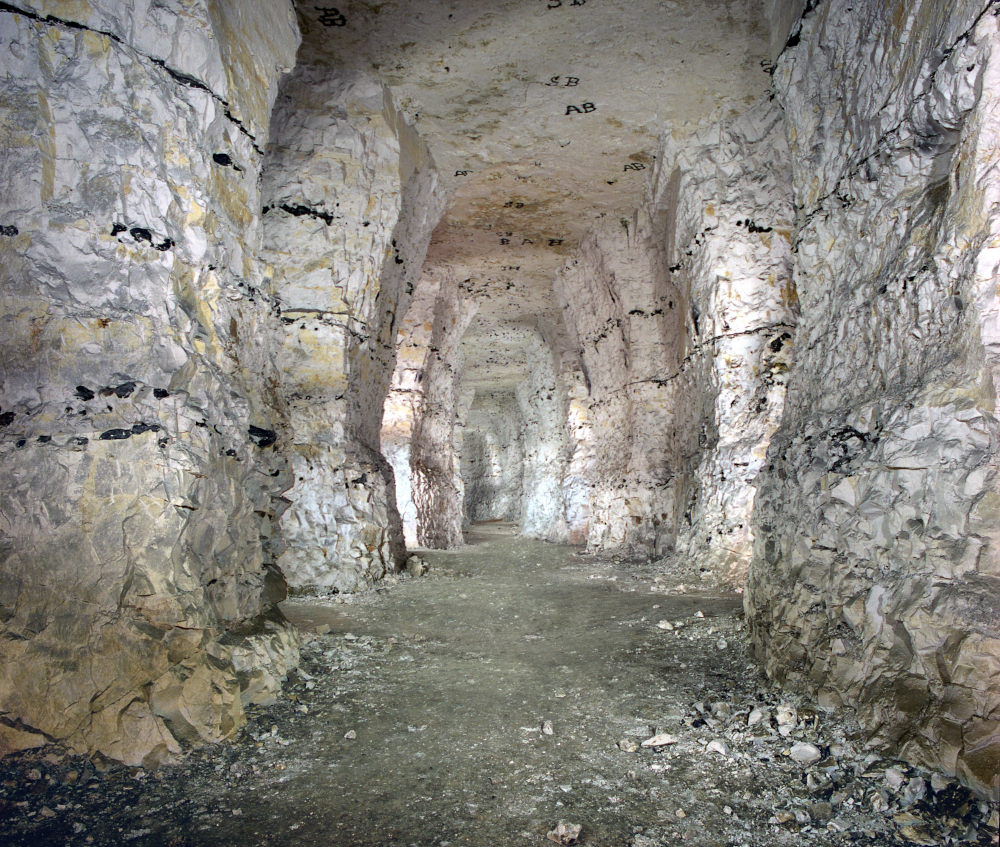
The mine has long since closed. Courtesy Pinner Local History Society, Ken Kirkman.
Growing demand for cement at home and abroad should thus have made a career in the cement production industry a sure bet for an ambitious young man. But to coin a mixed metaphor, the local industry was built on sand. Producing clinker (the basis of cement) from the chalk ballast unloaded by colliers returning from London was fine as long as the raw material was cheap and easily available.
However, from about 1870 the old wooden colliers were gradually becoming replaced by water-ballasted iron-hulled ships. As the old wooden ships were retired by rot, seaworm or plain wear and tear, so the east coast market for chalk ballast began to shrink. Supplies of chalk that were latterly simply dumped on the banks of the Tyne dried up. Tyneside cement manufacturers were forced to ship their Thameside chalk up the coast at commercial rates, increasing costs and threatening the profitability of the industry.
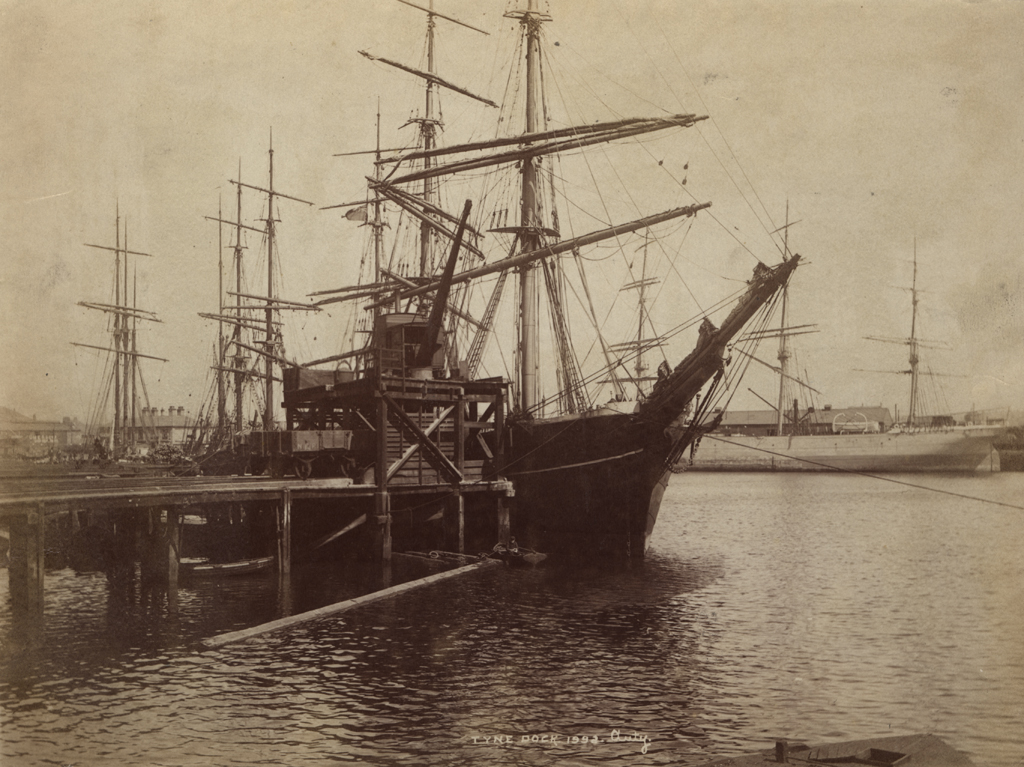
In fact the whole cement production industry on the banks of the Tyne faced increasing difficulties as the century came to an end. Some factories were using production methods that were becoming out of date, and many went out of business. By 1895, the Wallsend Cement Works that Thomas Sill managed had ceased trading. Continuing closures and amalgamations throughout the industry saw the founding of United Alkali Co in 1891, and ultimately the formation in 1926 of Imperial Chemical Industries, or ICI.
Thomas Sill’s competitor, Charles Potter, must also have been affected. Retiring in 1909, by 1912 he had also closed his cement enterprises at Willington Quay. One was sold in 1912 to the British Portland Cement Manufacturing Company (in which he retained a directorship) and in 1913 the Willington Cement Works were closed, with parts of the site sold to J T Eltringham & Co for shipyard development.
The end of the coastal coal trade
The 1914-1918 war effectively finished off the local cement industry, as coastal trade became incredibly risky, especially for the many sailing ships still in use on the North Sea. Previously skippers could cope with being blown off course to Holland or Germany by unfavourable winds, simply continuing their voyage with a small delay a couple of days later. But wartime meant it was likely they would fall into the hands of the German navy – resulting not only in loss of cargo but also the ship itself.
The sea route for coal from Newcastle to London never recovered. Rail took over, and coal in the Midlands was also nearer to the south-east. Complete failure of chalk supplies in the north east also forced the remaining production plants to switch to local limestone instead. After the war, there was no incentive to switch back.
With the closure of Wallsend Cement Works in 1895, manager Thomas Sill may have come upon hard times, and was likely forced to move away for work. He was divorced from his wife Barbara in 1899 and left the locality, and when we next see him he crops up as a 54 year old widower living in 1911 in Stockport, Cheshire.
There is inevitably a certain measure of guesswork here, but if he is the same man, then by 1911 in Stockport he had his 24 year old son, John Palmer Sill, living with him, as well as an adopted daughter, Ethel, 35, and a household servant. Father and son were employed in a chemical colour manufacturers producing acid pigments.
The 1921 census shows our Thomas T Sill as a widower aged 64 years and 10 months living as boarder in City Road, Chester. This Thomas was the manager of J Summers and Sons Ltd chemical works ten miles away in Shotton, which suggests that he is our man.
After that the records are unclear – a Thomas T Sill died in 1937 aged 81 at Erpingham, Norfolk. However another candidate, a Thomas Toward born c. 1860 died in June 1908, and is buried at Ropery Lane Cemetery, Chester le Street. Knowing the tendency people have to return to their roots in later life, I am inclined to think that this man is our Thomas T Sill, despite the name discrepancy in the records.
But back to 1896. Who were the next residents of our house in Stannington Avenue? Watch out for the next episode.
Acknowledgements
Researched and written by Philip Hunt of Heaton History Group.
Can You Help?
If you know more about Stannington Avenue or have memories or photos to share, we’d love to hear from you. You can contact us either through this website by clicking on small speech bubble immediately below the article title or by emailing chris.jackson@heatonhistorygroup.org
First published by Heaton History Group on 6 April 2026

