

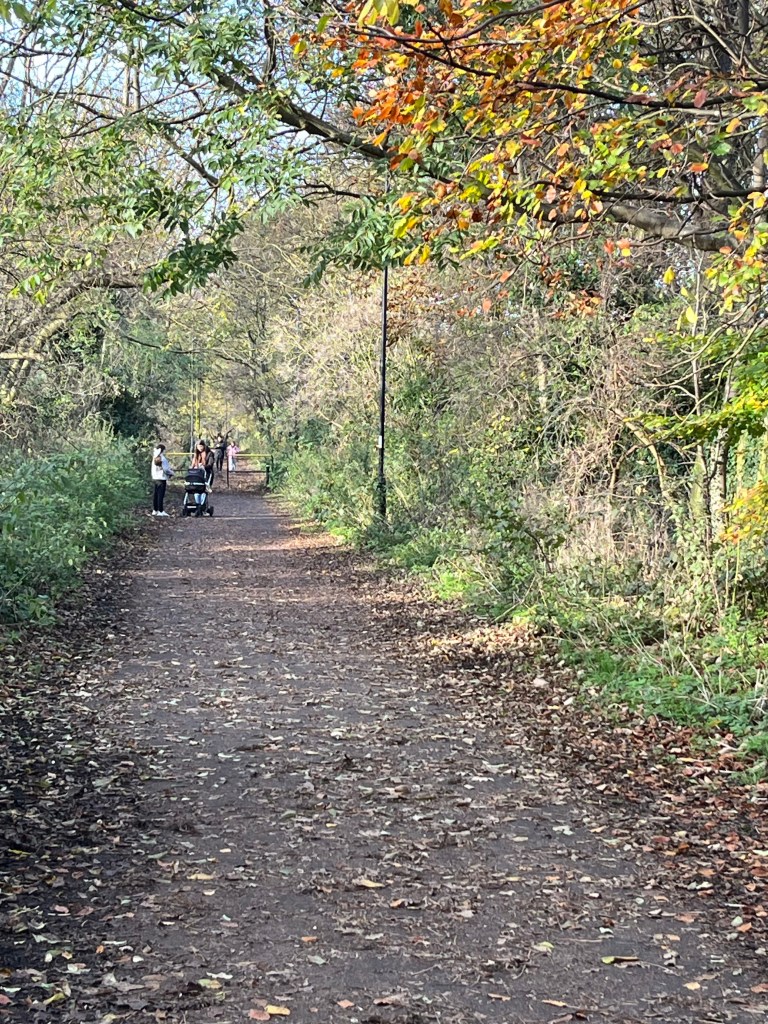
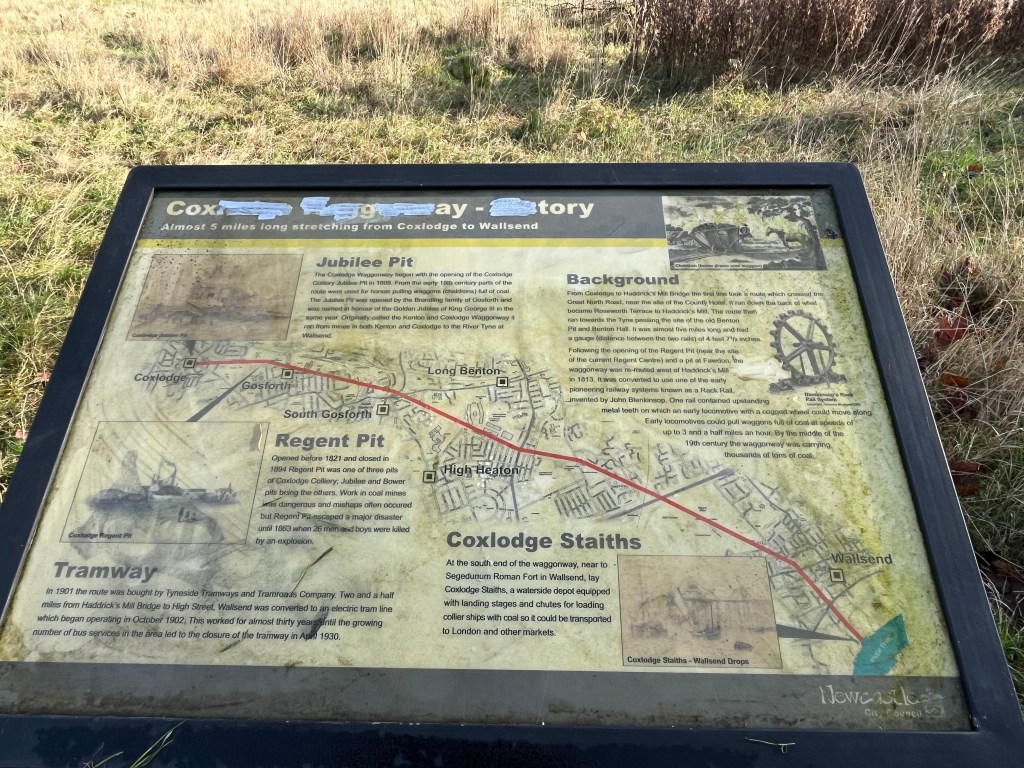
Those of us who pass along it to school, work, church or a hospital appointment or linger to watch wildlife, have a chat or just enjoy the changing seasons, know the green, traffic-free pathway through High Heaton, simply as ‘the tram track’. However, the story of what is more properly called the Kenton and Coxlodge Waggonway or, for short, the Coxlodge Waggonway began more than 215 years ago. And, almost a century before it became a tram route and well before the opening of the much better known Stockton to Darlington line, it played an important part in the development of railways.
Overland
In about 1808, the owners of collieries in Kenton and Gosforth decided that, rather than transport their coal overground to the closest point on the Tyne to their pits, they would prefer a longer overland journey to a point further down the river, from which it could be shipped direct to London and overseas. This way, they reasoned, they would be less dependent on expensive and sometimes truculent keelmen to transport the coal on their smaller craft to a point further east that larger seagoing ships could reach. The colliery owners wanted to cut out the middle men.
The first plan, in 1808, was for a waggonway to the mouth of the Ouseburn and another idea the same year was for one to go through Coxlodge, Gosforth and Longbenton to join with the existing Heaton Waggonway which went to St Anthony’s Quay in Walker. But then an opportunity arose to buy another existing line, which went from Bigges Main (situated where the Centurion Golf Course, south of the Coast Road to the east of Benfield Road, is now) to Wallsend. So all the colliery owners had to do was build a line to Bigges Main.
The Coxlodge Waggonway certainly wasn’t the first railway line built to transport coal; there are records of rails being used in Shropshire and Nottinghamshire as far back as the late 16th century. And during the 16th and 17th centuries, waggonways became increasingly utilised across the north-east coalfield. But Coxlodge was at the forefront of major advances in the development of these railways during the early 19th century.
Horse power
By January 1809, the new waggonway had already been built from Kenton and Coxlodge as far as the Ouseburn at South Gosforth, where the builders of the new line’s first big challenge was impressively overcome. The illustration below shows the elegant 140 yard long viaduct which carried the track across the steep banks of the Ouseburn.

The waggonway from its starting point at least as far as Benton Lane (now Coach Lane) was, from the outset, built to the highest standards of the day: metal plate was laid on oak rails. Many rails were still made of wood even though iron ones had been pioneered some 40 years earlier at Coalbrookdale in Shropshire, where there was a ready supply of surplus crude pig iron. But generally, because the metal was so expensive, thin iron plates were used on top of wood and only on those parts of the track subject to most wear and tear. However, a cost-benefit analysis on the Coxlodge Waggonway showed the colliery owners that the weight of the fully laden waggons, together with the frequency at which they passed along the new track and the falling price of iron, meant it was soon worth ripping up the plated rails and replacing them with cast iron. This would give them an edge over competitors.
In those early days, horses pulled the waggons. Steam power had been harnessed in north-east collieries for a century for pumping water and for underground haulage but, for pulling heavy loads long distances above ground, horses were still much more cost effective. Metal plate rails had made their work easier but the section of the waggonway immediately to the east of the Ouseburn was a challenge even for them.
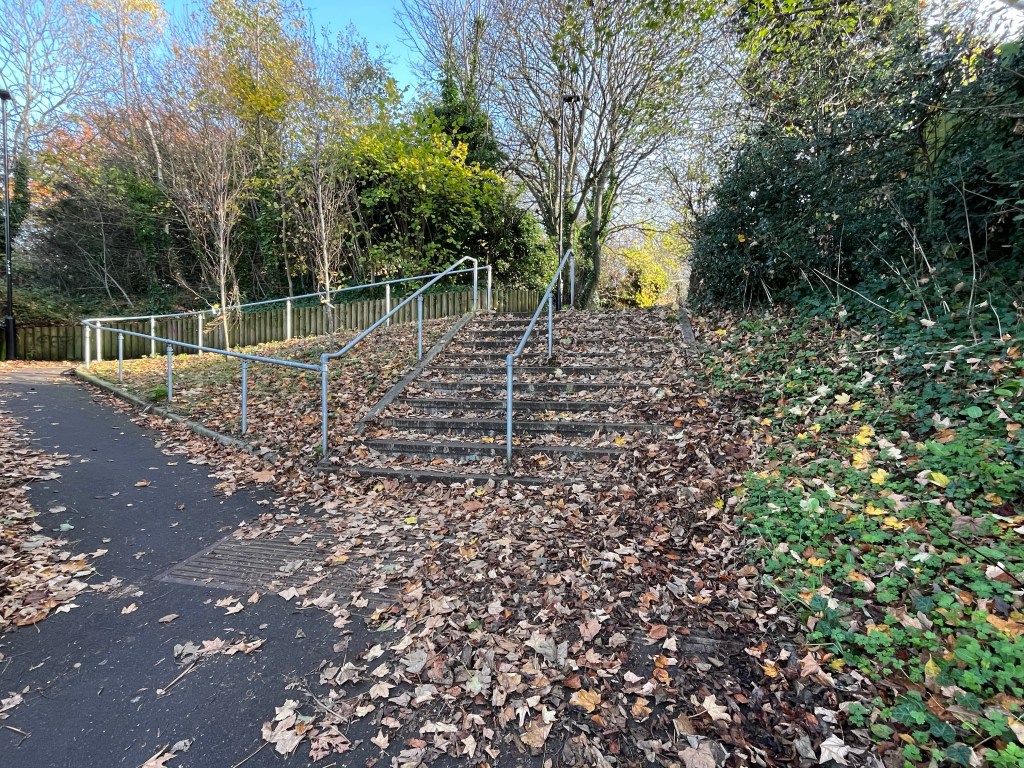
There was a steep (1:24) gradient for the first 210 yards and then a continuing gentler climb for a further 740 yards before the route levelled out and eventually descended. Users of the tram track today will remember that the approach from South Gosforth is via either a flight of steps or a steep ramp.
The owners were constantly looking for ways to make this section easier, quicker – and, always the ultimate aim, more profitable. In 1812, costings were drawn up for a stationary engine to draw the waggons up the incline from the Ouseburn by rope haulage. The construction costs would have amounted to £1,311 4s 0d. The proposal was not adopted and instead, as we have seen, cast iron rails were commissioned to replace the metal plate. They would at least enable the horses to move faster.
Steam
However, during the first decade and a half of the 19th century, the move towards steam locomotion was inexorable. Richard Trevithick had built several locomotives, again at Coalbrookdale, but they had cracked the pioneering iron rails mentioned earlier.
But on 24 June 1812, a letter arrived which would transform the Coxlodge Waggonway. John Blenkinsop, a Walker man, wrote to the colliery viewer, John Watson, to say that he had designed a ‘steam carriage’ which was successfully operating at Middleton Colliery near Leeds, owned by the Brandling family of Gosforth. Blenkinsop estimated savings of 85% to move the same quantity of coal and, in addition, reminded Watson that steam engines could operate all night and needed no rest. The £6,247 construction costs could, he said, be offset by the sale of 77 horses, their hay and some redundant iron rail.
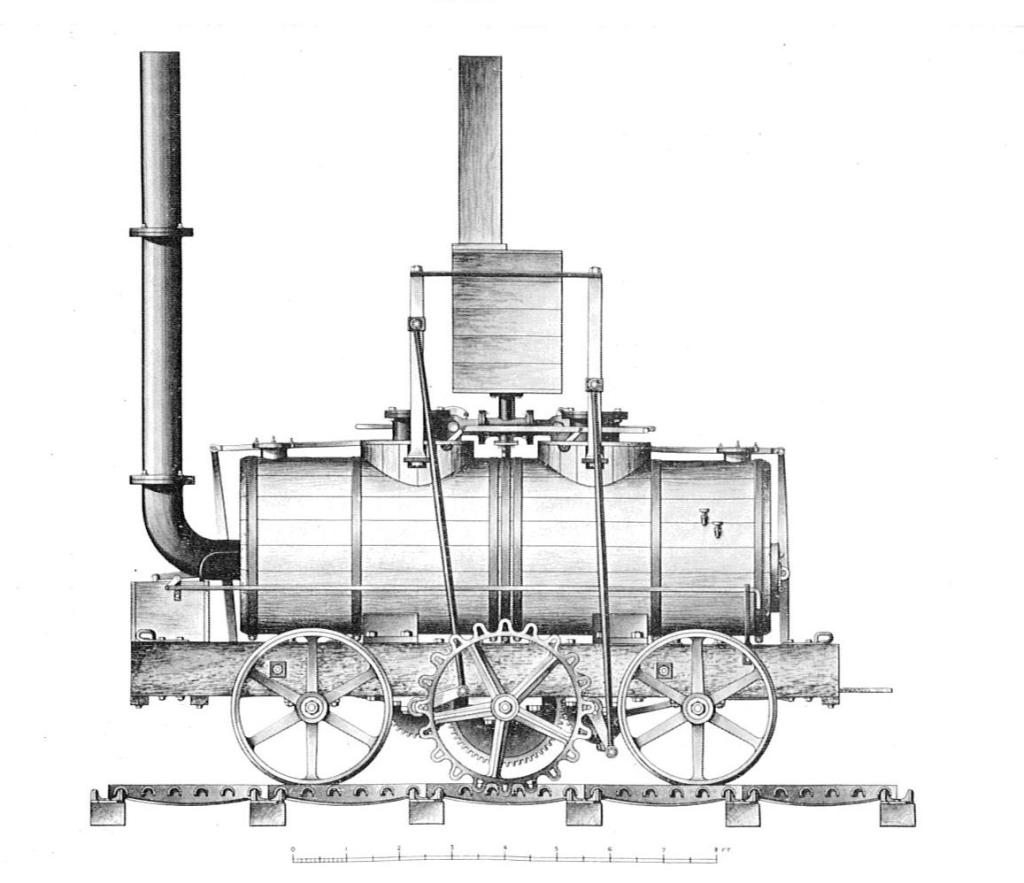
After some negotiation, an engine was delivered and on 2 September 1813, before a large crowd of spectators (among them thought to be George Stephenson), Blenkinsop’s steam engine (subsequently named ‘Willington’) set off down the waggonway. This was the first time a train powered by a steam locomotive had been seen in the north-east. It was a two-cylinder, geared steam locomotive which utilised the tooth-rack rail system of propulsion.
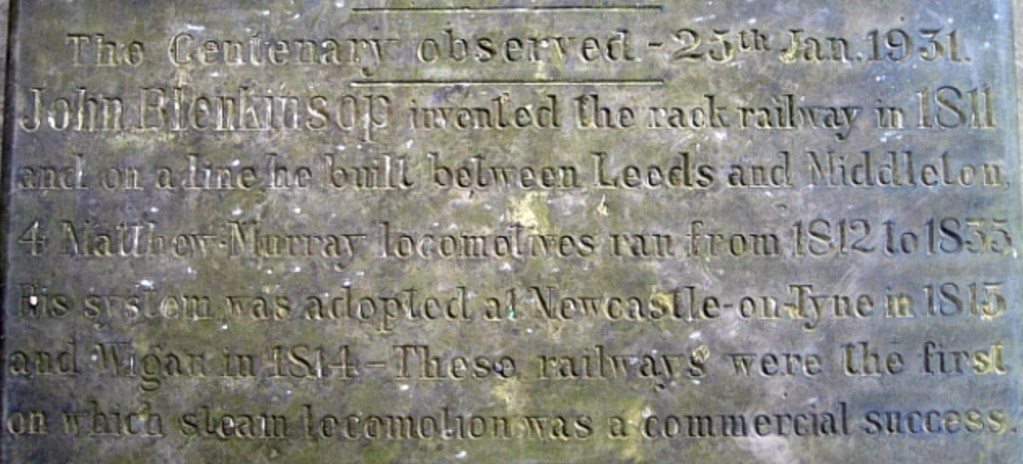
After the successful trial, ‘a large party of gentlemen connected with coal mining partook of an excellent dinner’ at the racecourse, which was at that time on the Town Moor. John Blenkinsop is not as well known to the wider public as Stephenson, or even Trevithick, but he was a true pioneer of steam locomotion and a memorial stone on his grave in Leeds refers to the importance of his work on the Coxlodge Waggonway.

Incidentally, only a couple of miles away on the Heaton Waggonway just three weeks later on 24 September 1813, William Chapman, a Yorkshireman who had moved to Newcastle as a young man, conducted trials of his own ‘travelling engine’ , which pulled itself by means of a chain. Its design included a bogie to spread the weight of the engine and allow it to move freely around curves. At this stage, the chain frequently broke and so Chapman’s engine was only used for pumping and haulage at Heaton’s Middle and Far pits and Benton pit. But the bogie, first tried at Heaton, became a standard feature of steam locomotives throughout the world, an invention of international significance.
The following year, a second Chapman engine was built at the Ouseburn foundry of Phineas Crowther. It was built for the Lambton family’s collieries in County Durham but ended its days hauling coal from Heaton Colliery to Carville Gate.
Meanwhile on the Coxlodge Waggonway, by 1815, the use of steam engines had briefly been discontinued, seemingly as a result of bitter disputes between co-owners. They were, however, reintroduced on 25 March 1817, firstly just in the western section. (The South Gosforth incline was now described as rope-worked).
But George Stephenson too is part of the history of the Coxlodge Waggonway. It was he who ‘had devised an ingenious combination of gravity and steam power for Mr Brandling (who now had a controlling share in Kenton and Coxlodge colliery) – first tried on the 5th of October 1818.’
Heaton and High Heaton were truly at the forefront of the development of the rail transport of freight.
Passengers
But it wasn’t only coal that was carried on the Coxlodge line. There is evidence of, albeit unofficial, passenger traffic. We know this because of an unfortunate accident as early as 1814. A young woman called Margaret Dobson, daughter of a waggonman at Coxlodge Colliery, was returning from a visit to her parents back to Shields where she was in service. She and another woman were sitting on a board behind her father’s loaded waggon when, near East Benton, a loose waggon caught up with the one in which the women were sitting. In trying to escape, Margaret slipped and was killed.The other woman’s foot was crushed.
And this isn’t the earliest evidence we have of passengers being carried on Tyneside’s early railways. An early guidebook, D Akenhead’s ‘Pictures of Newcastle upon Tyne’, published in 1812, advises travellers to take a lantern, a change of clothes, strong boots and an old hat when taking a ride in a train of seven empty coal wagons on the East Kenton Waggonway into a coal mine. ‘As soon as you are placed, with your candles lighted, you set off at full speed, with a boy in the first wagon for your charioteer, into a tunnel six feet high, about the same in breadth and three mies in length. You will find it an advantage to have one of the men for a guide, to point out any thing that may appear striking on your passage to the pit…’ Surely one of railway’s first guided tours!
Celebrate
In 1813, the same year as the pioneering inventions of Chapman and Blenkinsop, Newburn’s William Hedley built ‘Puffing Billy’ for the Wylam Waggonway and the following year George Stephenson originally of Wylam, but now working at Killingworth Colliery, built ‘Blucher’ which hauled a train of eight loaded waggons at an impressive four miles an hour. We rightly celebrate the achievements of these two distinguished north-east inventors but are the contributions to the development of railways of men like Blenkinsop and Chapman made on the waggonways of Heaton and High Heaton less deserving of commemoration? They are all part of a continuum which a little later included people like Sir Vincent Litchfield Raven, about whom we’ve previously written.
Tram track
The Coxlodge Waggonway continued to carry coal until 1884. It fell into disuse after the closure of Gosforth Colliery that year. But in 1901, the Tyneside Tramways and Tramroads Company began a passenger service from Gosforth to Wallsend which used much of the old waggonway and continued until 1930. It was a busy route as it served the shipyards in Wallsend and (from 1924) Gosforth Park racecourse as well as residential areas, although on the stretch of the old waggonway of interest to us, it was passing through farmland. Most of the buildings which now line part of the track weren’t built until after the tramline closed.
There are very few people alive who would remember the trams but nevertheless it’s those three decades we recall in the locally universally used name ‘the tram track’.

However, let’s not forget the previous 90 plus years of the waggonway’s history and the fact that railways existed well before the Stockton to Darlington line, the forthcoming bicentenary of which is said to mark ‘200 years of train travel’. In Heaton and High Heaton, we celebrated that a long time ago!
Legacy
And, just as importantly, as we approach almost a century since even trams ran along it, let’s continue to enjoy and protect the green corridor that is the Coxlodge and Kenton Waggonway’s legacy in the 21st century.

If you know more about the history of the Coxlodge Waggonway / ‘the tram track’ or have memories or photos to share, we’d love to hear from you. You can contact us either through this website by clicking on small speech bubble immediately below the article title or by emailing chris.jackson@heatonhistorygroup.org
Acknowledgements
Written by Chris Jackson of Heaton History Group, making use of the research of HHG’s Les Turnbull as published in his books listed below, from which much more detailed information can be obtained.
Sources
‘The Railway Revolution: a study of the early railways of the Great Northern Coalfield 1605-1930’ / by Les Turnbull; NEIMME with the Newcastle upon Tyne Centre of the Stephenson Locomotive Society, 2019.
‘Railways Before George Stephenson’ / by Les Turnbull; Chapman Research, 2012
‘The Willington Waggonway: a rival to Stockton and Darlington’ / by Les Turnbull; NEIMME with the Newcastle upon Tyne Centre of the Stephenson Locomotive Society, 2023

