

Although Meadowfield is now well known as a social club, it does have an earlier history as a private residence which strongly connects Heaton to the industrial and mercantile aspects of the north-east of England in the mid to late nineteenth century.
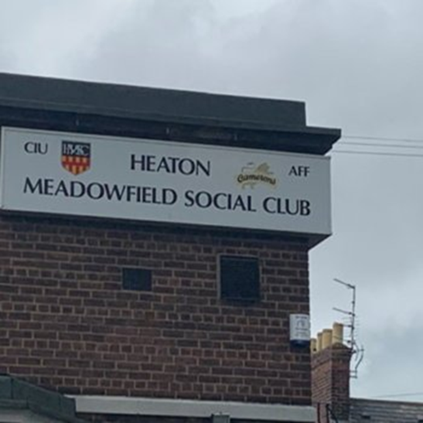
Those familiar with the story of Heaton’s long road to having licensed premises will be familiar with the East End Hotel and its connections to the building just behind it. Meadowfield House itself however, in its earlier incarnation as a family home, does have an interesting tale to tell in terms of individual enterprise and challenge set within a context of rapid socio-economic change.

Though this piece will be looking at the beginnings of the name Meadowfield in the narrative of Heaton it does not seek to ignore the long history and continued vitality of the social club which now bears the name.
An article in the ‘Evening Chronicle’ of 27 February 1965 was fulsome in its praise of the Meadowfield Social Club, ‘Everything always goes as planned’, but also commented that ‘only the staircase remains of the original building’. Mention is made of the neat lawns bordering the club, the attractive flower beds and the 990 members as well as over 20 staff. Much has changed in the years since then, including the staircase, but the club is still a welcome haven and social centre for many Heatonians. Here though, we concentrate on its earlier incarnation as a home.
Cuthbert Hunter
On the 21 February 1795, Cuthbert Hunter was born to John and Mary of Ballast Hills, All Saints. His baptism at Brunswick Place Wesleyan Chapel in March of that year indicated his family’s religious convictions.
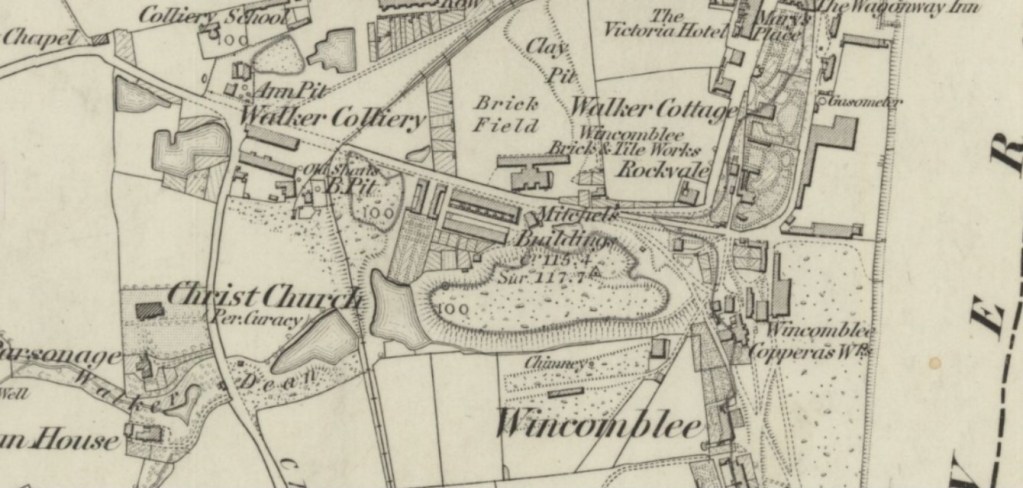
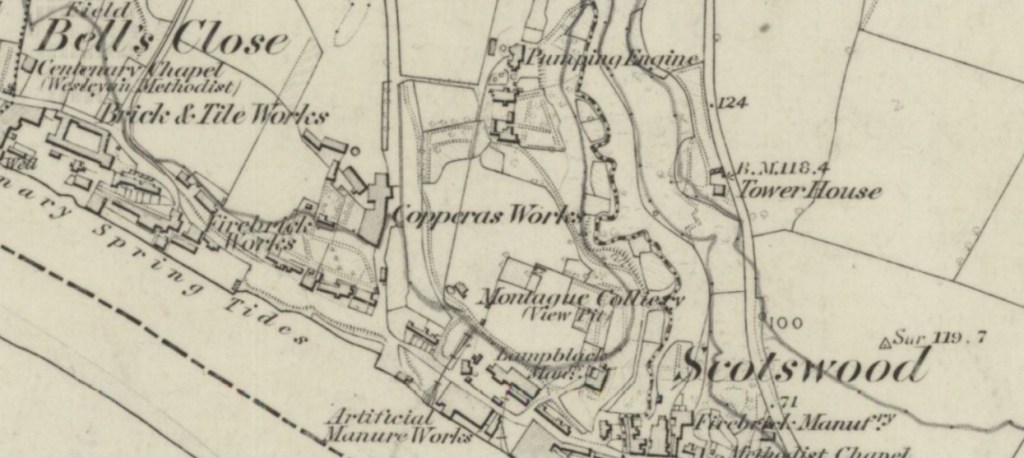
By the census of 1861, Cuthbert, together with his wife Jane and daughters and granddaughter, was living at Walker Cottage, Wincomblee with his employment being given as a ‘copperas maker’. The house together with nearby works can be seen in the Ordinance Survey map of 1864 below
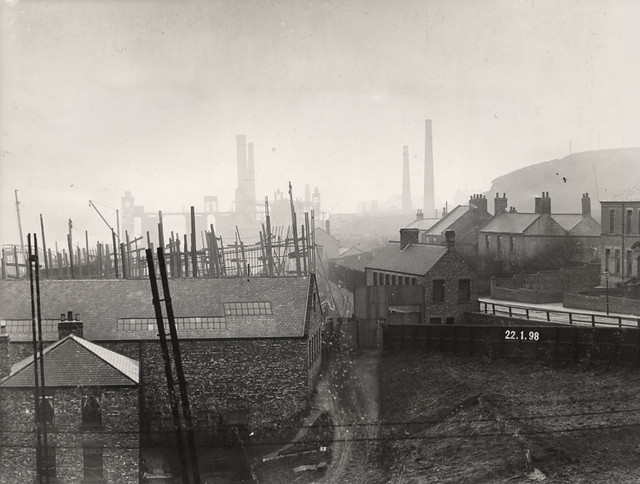
Cuthbert’s industrial enterprises had been well established since at least 1834 when ‘Pigot’s National Directory (Northern Counties)’ has him as a copperas manufacturer of Scotswood. The lease for the Scotswood Copperas Works had been purchased from Lord Rokeby by public auction at the Groat Market’s Crown and Thistle Inn in March 1833.
The move from Scotswood to Wincomblee serves to highlight the phenomenon of the burgeoning ‘chemical’ industry which begin to spring up close to collieries from the mid nineteenth century onwards. The ‘Newcastle Daily Chronicle and Northern Counties Advertiser’ reported on 4 July 1861 that Cuthbert Hunter’s lease for the copperas works was renewed for a further period of 21 years. The firm of Hunter and Company were also engaged in brick manufacture. Hunter was clearly already a man of some means who was soon to choose the green fields close to Heaton Hall as a suitable place to build a new residence.
Copperas
Over ten years before Cuthbert’s birth, Bartelemy Faujas de Saint-Fond, a French geologist and traveller, had embarked upon a lengthy tour of Great Britain. He had made a point of highlighting the ingenuity and enterprise of the people of the north-east of England.

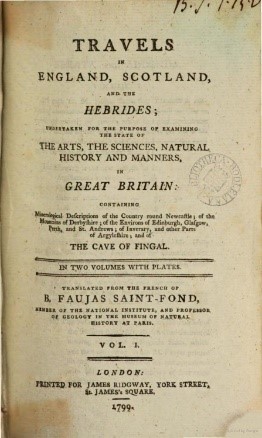
‘The industry of the inhabitants of Newcastle is so active that they are accustomed to apply it to everything, they have even turned to profit the pyrites which injures the quality of the coal but which is found in great abundance in some of the mines. The pyritious (viz) substances are carefully separated from the coal, and the expense which this labour might occasion is repaid with usury by the vitriol which is produced.’ (1784)
Iron pyrites or ‘fool’s gold’ is often found within or close to coal seams but would usually be viewed as a contaminant rather than a substance of potential value.

Faujas’ position as Inspector of Mines for Louis XVI enabled him to journey widely across Europe and afforded him opportunities for the discovery of technical innovations and industrial processes. In the north-east of England, he drew attention to the larger-scale operations which had replaced the more traditional and lengthier, weathering processes. These small-scale approaches had been employed for hundreds of years to make iron sulphate, green vitriol, or copperas.

The more orthodox manufacturing method was to stack pyrites on a sloping bed of clay where weathering over time would result in an iron sulphate solution running downhill to collect in wooden tanks. This liquid, often with the addition of scrap metals, would then be evaporated resulting in crystalline copperas. This could also be used to make an early form of sulphuric acid called ‘oil of vitriol’. It is unsurprising to find that those who were designated ‘copperas makers’ had other associated forms of employment as the weathering process would often take from three to five years. The number of mines in the locality together with the frequent appearance of iron pyrites in the north-east encouraged a more industrial and large-scale production of green vitriol.
The first copperas works in the north-east had been established by Thomas Delaval in 1748 in Hartley, Northumberland. Locations across Tyneside from 1798 ranged from Willington Quay, Dunston and Felling to Scotswood, Walker and the Ouseburn. There is a clear association between coal mining and the early ‘chemical’ industry. This can be seen in Walker when salt springs were found in the King Pit. William Losh then moved his alkali works from Scotswood to Walker to take advantage of this valuable natural resource and set up the Walker Alkali Works by the river. Here he manufactured sulphuric acid, copperas, caustic soda, and dyes. Cuthbert Hunter’s copperas works were adjacent to Losh’s Alkali Works in Low Walker. In fact, the recently invented Leblanc Process to produce soda necessitated the employment of sulphuric acid which may have been generated from green vitriol. Apart from road names such as Copperas Lane in Scotswood, little remains of the industry today.
Uses
The most common uses of copperas were in the tanning industry for blackening leather, as a dye fixative in the textile industry, and as a constituent for ink. In leather dye and in oak gall ink, the soluble iron from the green vitriol would react with the tannic and gallic acids in the leather solution, to form iron tannate and iron gallate, both of which are an opaque black.
In addition, copperas was utilized as a mordant to fix dyes for the colouring of raw cloth – a use it retains to this day. Unsurprisingly the massively increased production of textiles in the industrial revolution led to a steeply rising demand for dyes and colourings for the cloth produced. Andrew Ure in his ‘Dictionary of Arts, Manufactures and Mines’ of 1839 wrote that ‘The salt is extensively used in dying black, especially hats, in making ink and Prussian blue, for reducing indigo in the blue vat, in the China blue dye, for making German oil of vitriol, and in many chemical and medicinal preparations.’
There are a number of modern uses of this chemical compound including as a supplement for treating anaemia, as a preventative medicine for constipation, as a water treatment to prevent eutrophication (when bodies of water become over rich with nutrients), as well as a fertilizer and lawn conditioner. It is interesting to note that the map of Scotswood of 1868 contains an Artificial Manure Works close to Hunter’s copperas works.
Faith
The relatively easy access to some of the materials utilised there may have encouraged three ‘foreigners’ to steal a quantity of iron from the copperas plant in November 1863. The men, Maddis Kimber, Jurvig Tross and Peter Sallin, who were sailors on board a Russian ship called the ‘Antrias’, were remanded in custody having been charged with the theft of two hundredweight of iron from Cuthbert Hunter’s works. As the material had been recovered and to avoid delaying the departure of the vessel, Mr Hunter declined to prosecute. The prisoners were released on payment of the costs of the case and under the assurances from their captain regarding their good behaviour in the future.
The frequency with which small thefts and petty crimes would be brought to the attention of the magistrates is emphasised by another theft from Hunter’s engine works in 1869. Thomas Robinson of North Shields was charged with the theft of several tools including a saw which he was found to have pawned. The prisoner was remanded in custody. It is interesting to speculate how far Cuthbert Hunter’s own religious convictions played a part in what seems to be his relatively lenient view of these criminal transgressions. It is good to see him celebrating a happier event, the marriage of his daughter Isabella to William Cochran Carr of South Benwell House on 22 June 1865.
Meadowfield House
The first record of the existence of Meadowfield House in Heaton as a habitation comes in the Electoral Register of 1870 which gives the name of Cuthbert Hunter as the sole registered voter at that address. It is interesting to note that the register for the previous year has Cuthbert Hunter living at ‘Bloomfield’ in Heaton which may well have been the first name of this recently constructed dwelling.
The opening of the new Wesleyan Chapel in Walker in September 1872 afforded more evidence of the importance of faith for Cuthbert Hunter and his family. The ‘new and elegant’ building cost £1,450 to construct, though the land itself had been given at no cost by Cuthbert Hunter. The opening event was attended by 600 people and a congregation of at least 400 was expected each week. The continued thread of Wesleyan belief and ecclesiastical influence are apparent in Cuthbert Hunter’s life and serve as a good reminder of their influence and significance in nineteenth century society more broadly. The chapel itself was in use until 1976 but was demolished after an arson attack in the 1980s.
The ‘Durham County Advertiser’ of 6 December 1872 recorded the death of Cuthbert Hunter at the age of 77. He is buried in Jesmond Old Cemetery.
William Taylor
In November 1877 the house and land of the Meadowfield estate was advertised for sale and the census of that year has no entry for the residence. Indeed, there is no reference to any inhabitants until the 1882 Electoral Register which contains the name of William John Taylor.
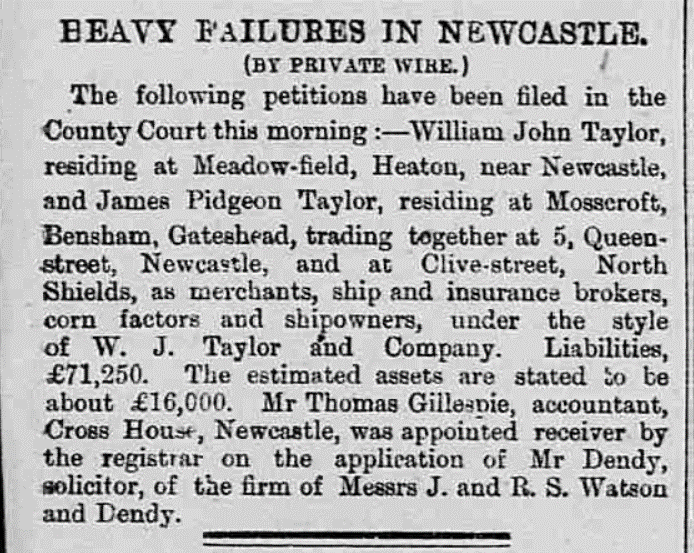
Ward’s Directory of 1871 has William J Taylor and Company, ship brokers of 33 Quayside, residing at 16 Elswick Row. The entrepreneurial flair which many at the time exhibited would not however always be easy to sustain. The ‘Sunderland Daily Echo’ of 23 Sept 1880 reported the following:
Litigation
This was followed up with reports in the ‘Newcastle Journal’ under the heading ‘Commercial Failures in Newcastle’ that a petition for liquidation had been presented at the Bankruptcy Court. As the firm’s liabilities were relatively small, no wider repercussions for commercial trade on the Tyne was expected. This does serve as a reminder however that the business of being ship brokers and merchants was fraught with uncertainty and challenge. Under the provisions of the Bankruptcy Act of 1869, trustees were appointed to act as recipients of any debts payable to the firm as well as outstanding claims from third parties.
The next appearance of the Taylor brothers in the local newspapers and courts came in the ‘Newcastle Courant’ of 15 July 1881. William John Taylor and a pawnbroker’s assistant, William Ramsay of Gateshead, were forbidden by the Master of the Rolls from using the trade mark of ‘Ramsay’ on fire bricks and other fire clay goods.
The case had been brought by Henry Milvain and other plaintiffs who had been granted the use of the trademarks of the late George Heppel Ramsay, on their purchase of his coke and associated manufactories at his decease. Taylor and the pawnbroker’s assistant were forbidden from using the name ‘Ramsay’ on any products as well as any circulars or invoices issued by them. This seems to have been a case of somewhat ‘sharp practice’ when economic times were increasingly challenging. The dubious nature of some of the business dealings appears to continue rather than abate, however, as on 11 July 1882 an alleged fraud by Newcastle merchants W J Taylor (37) and J P Taylor (30) was disseminated in the local press under the heading, ‘Alleged Fraudulent Bankruptcy’.
It was reported that William John Taylor and John Pigdon Taylor were being charged with several offences under the Debtors’ Act of 1869. The court were informed that the two defendants had begun work as office boys before beginning their own firm in 1864 with a capital of £30. The case against the Taylor brothers was brought by the trustees of their bankrupt concern. There was some suspicion that monies had been transferred to Mary Taylor, their widowed mother, with the possible intention of hiding it from potential creditors.
A more substantial accusation concerned the charge that a cargo of linseed that was on board a Russian ship named ‘Olga’ had been insured against loss with Lloyd’s of London. It is certainly the case that the vessel and its valuable cargo failed to arrive on the Quayside with the prosecution contending that the ship did not even exist. Though there are some obscurities regarding the financial interactions within the Russian mercantile context it does seem that the insurance monies of £1,300 were claimed and transferred to William John Taylor’s wife’s bank account. It was identified in the company accounts as being ‘profits’ from the ‘Olga’’s cargo. The prosecution claimed that the resulting profits from these sales and overseas trade were held abroad rather than being returned to the company where it would become part of the bankrupt firm’s assets.
A lesser charge concerned the adulteration of an export of Ramsey’s coke for export markets. The trustees brought to the court’s notice that a new firm with much of the same furniture of and a very similar name (W J Taylor and Co) to the bankrupt enterprise (Wm J Taylor and Co) was established soon afterwards on the Quayside. Its offices were staffed by two teenagers and a clerk named Walton who had served the defunct firm in the same capacity. It was alleged that a number of purchases of goods in the north-east were made before being exported suddenly and cheaply to Russia and the Baltic in the months before the firm’s impending and foreseeable collapse.
Both defendants were also charged with the mutilation of accounts as well as their ‘wilful destruction.’ At Heaton station an unsuccessful attempt was made to serve a summons on a Mr Paulsen who had been the company’s confidential clerk and European agent. A subsequent arrest warrant was issued. The legal counsel for the Taylor brothers insisted that all the charges would be answered and made an application for bail, which was granted.
Although much doubt and suspicion were thrown onto the business dealings of the company especially regarding foreign transactions (so much so that one of the clerks named Gustav Penterman was asked whether the word ‘swindle’ was the same in English and German), the jury acquitted both men. The summing up by Justice Cave had emphasised that the intentions behind the actions were at issue and that this then became matter of interpretation.
Reading back through the court reports from this distance of time there does not seem to be a certain and unambiguous attempt to deceive. Losses incurred close to bankruptcy could be viewed as possible examples of poor business practice rather than something more illegitimate. The jury did not debate for long before their verdict was announced to cheers from the public gallery.
It is known that Mr William Taylor still owned the Meadowfield estate and on 15 July 1886, his daughter Lissie Edith Taylor wrote to Uncle Toby of the Dicky Bird Society in the ‘Newcastle Chronicle’. She was recognised for her positive outlook and good work with the animal world and was made a Captain of the society on 24 July of that year.
The Daily Chronicle reported on the 18 June 1886 under the heading ‘Building Improvements in East Newcastle’ that 20 acres belonging to Sir William Armstrong and Mr Taylor of Meadowfield House had been purchased by a company of gentlemen resident in Newcastle. 500 dwellings intended for ‘clerks etc and the higher class of artisans’ were to be constructed following the ‘American style’, i.e., as numbered avenues rather than streets. The businessmen in question, John Barbour, Robert Brown and William Graham, submitted a number of plans to Newcastle City Council under the Improvement Act of 1892 and were successful in 1894 when their scheme was eventually approved. The detail and care with which these hand drawn maps and plans were constructed are testimony to the skills and professionalism of their creators.
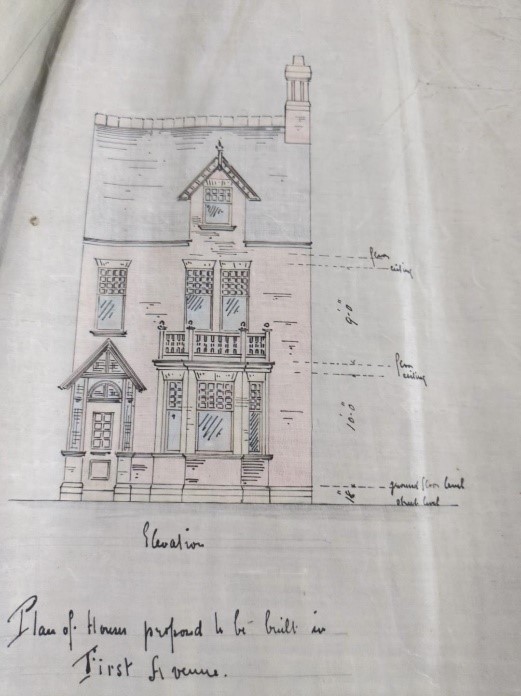
1894 successful building plan application held at Tyne and Wear Archives
The first avenue to be constructed facing the station was to be of a more ambitious character. The houses were to be designed ‘in the Queen Anne style of architecture, adapted of course to modern requirements.’ The late nineteenth fashion of employing a grid pattern with ‘avenues’ rather than ‘streets’ seems to have been prompted by an association with more sophisticated and exotic environments such as New York and Paris. The intention seems to have been to appeal to the lower middle class who might wish to differentiate themselves from the terraced housing of their working-class neighbours which would become more widespread to the east of Chillingham Road in the years to come. It is also the case, of course, that the early avenues would not be accessible to traffic which would seem to be a much more modern consideration given the paucity of vehicles in 1894!
Matthew Heckels
The next inhabitant of Meadowfield House after the Taylor family was to be Matthew Heckels, the manager of Walker Colliery, who lived there from late 1886 till his death in 1887. As will have been noticed elsewhere the individual spelling of personal names exhibited much variety and imprecision. The 1871 census has Matthew Heckels (27) living at 33 Barnes Lane House, and working as a colliery foreman while the 1881 Census has Matthew Heskels (39) born in South Shields, living at 27 Southfield, Castle Eden, married to Hannah, and employed as a mining engineer. It is known that Matthew Heckels bought Meadowfield House and the surrounding estate with the intention of renovating the building throughout. The optimistic and positive endeavours of the house’s new owner was however to end in tragedy.
On 19 August 1887 the ‘Consett Guardian’ reported the loss of ‘one of the most highly respected gentlemen in this district’. His obituary remarked upon the ‘intelligence and perseverance’ which enabled him to rise from beginning his working life at ten years old in Harton colliery to being overman at Castle Eden before taking on the post of colliery manager at Walker in 1883.
Matthew Heckels was well known for his innovations in underground haulage and for sustained involvement in a range of local and national bodies such as the Natural History as well as the Literary and Philosophical Society. Political activities centred upon his presidency of the Heaton and Byker Conservative Club where he endeavoured, unsuccessfully, to secure the return to parliament of Sir Matthew White Ridley.
As we have seen elsewhere an allegiance to Wesleyan Methodism was almost an ever present in industrial and commercial activities of the late nineteenth century. Matthew Heckels was one of the principal officers in the Bainbridge Memorial Chapel on Heaton Road and had made strenuous attempts to achieve a reconciliation with the striking miners at Walker Colliery and across the Northumberland coalfield.
This record of achievement and success was brought to a sudden and disastrous ending in the summer of 1887. In the early spring Mr Heckels was superintending the refurbishing of the house and its contents when, according to newspaper reports, he slipped on some ice in the garden. Although there did not seem to be too much damage done a gradual decline took hold and confinement to bed was advised. Despite a slight improvement in August, Matthew Heckels suffered a ‘relapse’ and passed away at the age of 43.
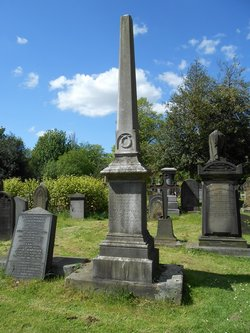
The funeral at All Saints Cemetery saw the attendance of many significant figures from the business, industrial and religious worlds. It is interesting to note that the very complimentary obituary in the ‘Consett Guardian’ maintained a spelling of Matthew Heckles though the correct version (Heckels) can be seen on his tombstone below.

The 1887-8 Electoral Register has Thomas Urwin and Thomas Edmondson as the inhabitants of Meadowfield House. The link with Methodism was continued however with a Band of Hope demonstration and procession along Shields Road to a field at the rear of the house. Refreshments were supplied to around 200 adults and 1,000 children. A number of prizes were awarded by East End tradesmen for successes in sport and other contests. Mr. Urwin was thanked for his support and generous contributions.
William Turnbull
By September 1888, William Turnbull and his family were living in Meadowfield House and the first application is made for a licence for the proposed East End Hotel on Chillingham Road. The rather lengthy and complex story of how this establishment became the first licensed premises in Heaton has been told already in ‘Town with No Cheer’.
It is interesting to note that, in 1891, Alex Turnbull (who features in ‘Rothbury Terrace: the Magpies’ nest’ ) was the first to propose the establishment of Heaton Social Club though this attempted venture had collapsed by 1893. Success was achieved however on 22 January 1907 when the ‘Newcastle Daily Chronicle’ reported on a new social club for Heaton under the sub heading ‘Temperance Refreshments’.
Meadowfield House became Heaton Social Club (with Councillor Branch and Alex Wilkie MP amongst the principal officials). The club was very explicitly and openly founded on temperance principles with a particular aim to cater for railway workers finishing their shifts. The large building was remodelled throughout with the construction of a billiards hall, separate card room, and a concert hall for 250 people. Councillor Branch spoke at the first meeting and expressed his view that ‘social clubs did more to encourage temperance than all the temperance orators.’ The strong emphasis upon individual involvement and self-improvement were also evident with planned lectures, musical evenings, and discussion groups.
Councillor Branch went on to observe that Judge Grantham had recently concluded that Durham was the most drunken county in the land but since then social clubs had sprung up and that ‘drunkenness in consequence had fallen over 100%’. It is worth emphasising how strongly the strands of temperance, Methodism, and respectability were entwined within much middle and working-class sentiment in the late nineteenth century. The eventual failure of the temperance movement to effect lasting change in legislation or social habits should not blind us to its powerful attractions for many of the inhabitants of Heaton in the late nineteenth and early twentieth centuries.
The immediate success of the club and the enduring appeal of sporting competition is demonstrated when in August 1910 a new covered quoits ground was opened by Mr Martin Wedderburn, the Northumberland representative on the Executive of the Club and Institute Union. This was followed by a ‘smoking concert’ chaired by Councillor Alex Wilkie MP who was also the club president. The significance and impact Meadowfield Social Club had on its local community is encapsulated in the photograph of 1915 below.
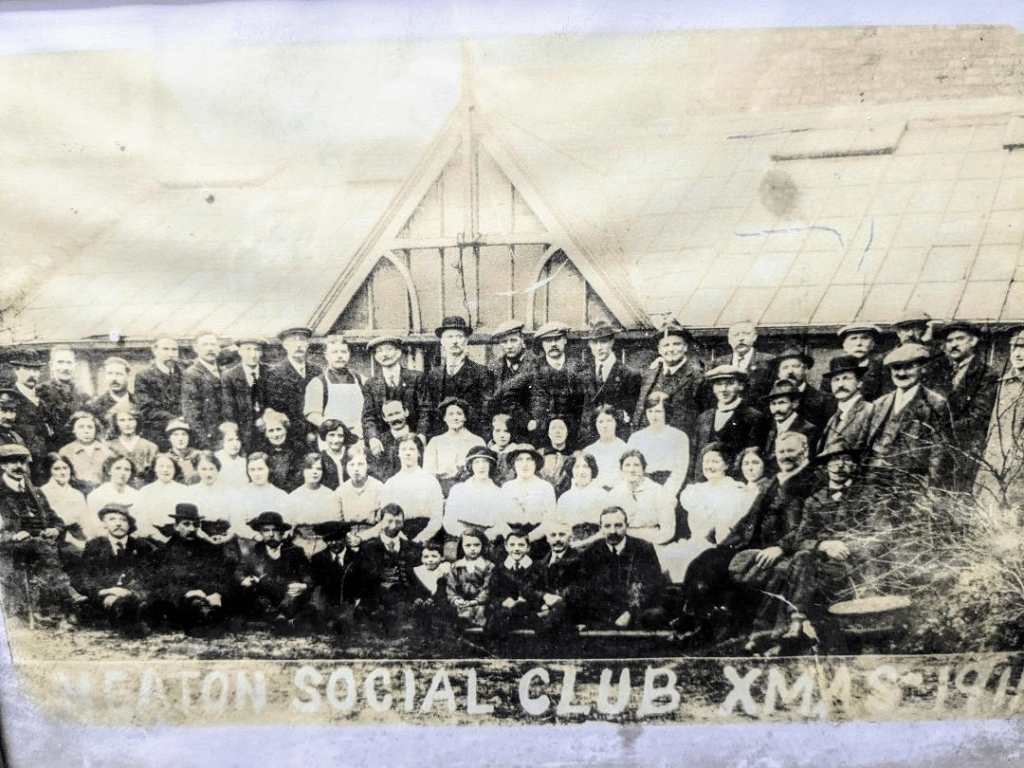
Whilst all social clubs are facing ongoing challenges in terms of popularity within a time of cultural change there is no doubt that Meadowfield Social Club still gives a warm welcome to new members and supporters.
Can You Help?
There is, however, one mystery which has yet to be solved. On the front wall of the social club there is a stone plaque which refers to the first incarnation of the Ouseburn Viaduct built in 1839.
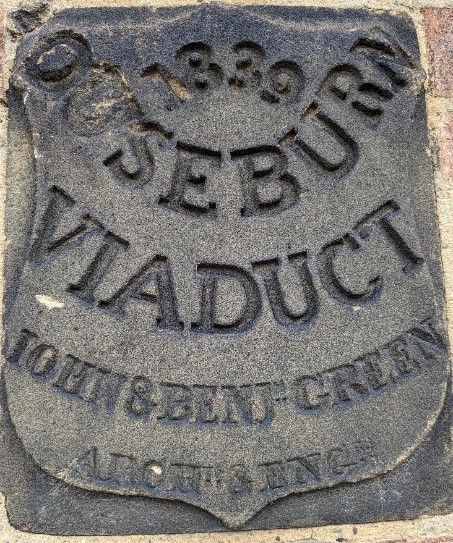
The initial construction of this viaduct was planned and engineered by John and Benjamin Green who were also the somewhat forgotten architects of the Theatre Royal and Grey’s Monument.
But, by 1869, the Ouseburn Viaduct was found to be in need of severe refurbishment and to some degree rebuilding. Work was needed to replace the Greens’ arches which had been made of laminated timber on what was known as the ‘Wiebeking’ system. The design and overall shape of the viaduct was retained with wrought iron replacing the wooden elements and the width doubling to accommodate four railway tracks.
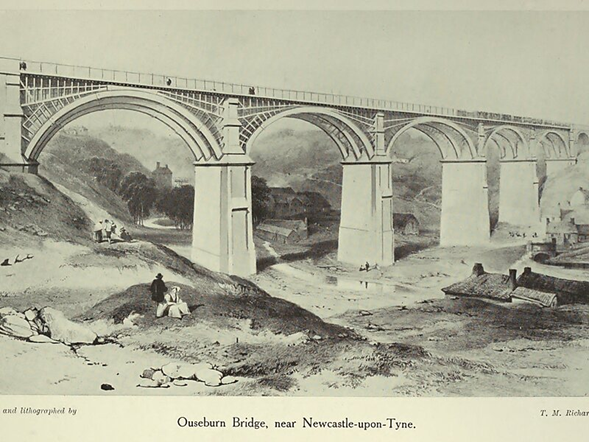
As this date seems to fit in with the initial building of Meadowfield House, is it perhaps the case that this plaque was retrieved from the original viaduct during the rebuilding work and taken to Meadowfield House, perhaps by Cuthbert Hunter himself, and then retained when, many years later, this building was itself rebuilt? Any further information or insights into this mystery or anybody or anything mentioned in this article will be gratefully received. You can contact us either through this website by clicking on the small speech bubble immediately below the article title or by emailing chris.jackson@heatonhistorygroup.org
Acknowledgements
Researched and written by Karl Cain of Heaton History Group.
Sources
Ancestry
British Newspaper Archive
‘A century of chemistry on Tyneside 1868-1968‘ / by W A Campbell for the Newcastle Section of the Society of Chemical Industry, 1968
‘A Dictionary of Arts, Manufactures and Mines’ / by A Ure, 1839: to be found at https://wellcomecollection.org/works/wt72yy94
‘From Byker to Heaton – the origins and history of Heaton Methodist Church‘ /by N F Moore and W.K. Robinson, 2000
‘Heaton from farms to foundries‘ / by A Morgan; Newcastle City Libraries, 2012
‘Methodism in Newcastle upon Tyne 1742 – 2010‘ / by G Fisher and Rev T Hurst; North East Methodist History Society, 2010
‘Travels in England, Scotland, and the Hebrides: Undertaken for the Purpose of Examining the State of the Arts, the Sciences, Natural History and Manners, in Great Britain‘ / by B Faujas-de-St.-Fond, translated from the French by James Ridgway, 1799
Tyne and Wear Archives
various trade directories


Seemingly my great grandfather Thomas Johnson was one of the founding members of the club, who died after being hit by a motor vehicle whilst walking home from the club..he is buried in Heaton cemetery.
My great grandfather,Thomas Johnstone was apparently one of the founding members.
Bowling was his sport and I still have his bowling ball leather bag.
Apparently he was knocked over and killed by a motor vehicle as he was on his way home from the club in 1923, and is buried in Heaton cemetery.
He may well be in the photograph you posted in this item.
Thank you for your post. Great to know that Thomas’s bowling back survives and is still in the family.
If it is the same building, which is very plausible, I might have photos of it from c. 1900.
It would be amazing to see your photos, Tom, if you could get in touch by email – Chris.jackson@heatonhistorygroup.org