

On 4 August 1921 a memorial to commemorate those from the Heaton Locomotive Works who had served in the ‘Great War’ was unveiled outside the main shed. It was stated that out of the 560 men employed 115 had ‘joined the colours’ and from those 18 did not return. Mr H J Stephenson, the North Eastern Railway (NER) Assistant Divisional Superintendent, said, ‘No living man could do justice or sufficient honour to the men who did not come back.’ ‘The Last Post’ was sounded and the memorial was unveiled.

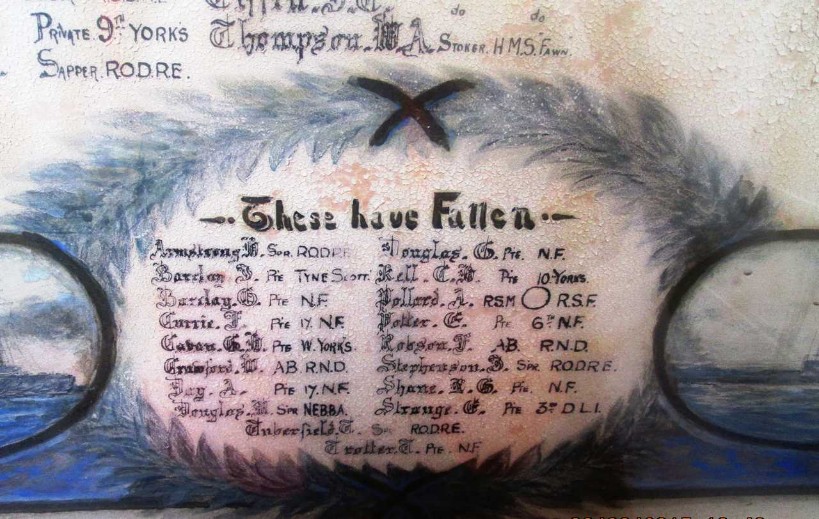
The roll of honour which is now hanging on the wall in the foyer of the Heaton Train Care Centre on Benfield Road contains eighteen names which represents those from the Locomotive Depot of the NER at Heaton Junction who gave the ultimate sacrifice. The work was made entirely by local members of the NER with the artwork being executed by J Mounsey, assistant fitter at Heaton Shed and J Raine, a signalman, completing the printing.

The Response 1914
Research using the ‘North Eastern Railway Magazine’ from the time has, however, enlarged the list of names to 25. This will encompass all who worked in Heaton for the NER beyond the Locomotive Depot itself. The declaration of war on 4 August 1914 saw an immediate response and large numbers of volunteers presented themselves for service.

Naval and military reservists would immediately return to their units followed by those who were already members of the Territorial Force which had been established in 1908, initially for home defence. The NER in total saw over 2,000 men leave its ranks in the first four days. It is worth bearing in mind that conscription was only introduced in 1916 (for the first time ever in Britain) and that working on the railways would have been seen as an essential occupation in any case. Volunteers were simply that.
First and Last
The first man from the Heaton depot to lose his life was, however, an army reservist who had joined up with the 2nd battalion of the Northumberland Fusiliers. George Bartley, who fell on 8 May 1915 at the second battle of Ypres, is included in the list of names on the Menin Gate near Ypres. That month saw the first use of chlorine gas by the German forces in the area close to the ruined town itself.
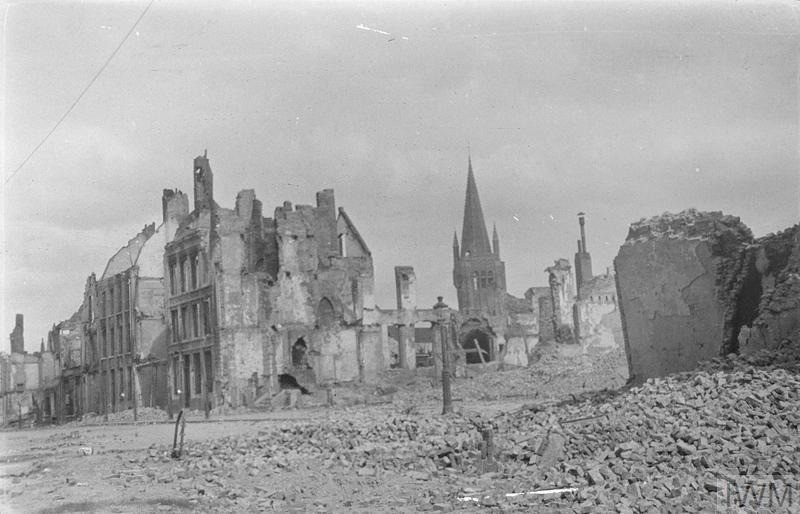
The 2nd battalion of the Northumberland Fusiliers was involved in the initial defence of what had become known as ‘Mouse Trap Farm’ (after its earlier informal title of ‘Shell Trap Farm’ had been considered too demotivating). As is common for many first world war combatants, the details are scant for the individuals who perished here unless they performed particular acts of valour or sacrifice. The nature of the conflict itself means that many men were always missing rather than ever found. George’s name can be seen on panel 12 of the Menin Gate.

Entrenchment 1915-16
In the census of 1911, Charles Henry Kell is living with his two brothers in Byker. This Gateshead born ‘jobbing labourer’ had joined up with the 10th battalion of the West Yorkshire Regiment which had been raised in York on 3 September 1914. After training in the south of England the regiment landed at Boulogne on 14 July 1915. He was twenty years old when he was ‘killed in action’ on 28 September during an attack on the southern part of the Ypres salient at Loos. His name can be found on the memorial there.

The battle of Loos has some wider significance as it saw the first use of poison gas by the British Army as well as what may be considered to be the more permanent appearance of ‘no man’s land’ between the fortified positions. As we know this was to become an enduring feature of the conflict until its final year.
It is perhaps of no surprise that the most well-known battle of the war on the Western front also saw the largest number of casualties from the railway workers of Heaton. 1 July 1916 marked the beginning of the battle of the Somme. Nine battalions of the Northumberland Fusiliers went ‘over the top’ that day. Lieutenant Corporal Stan Henderson of High Heaton spoke in later years of what he had witnessed. ‘It was suicide, a massacre; you could hear the wounded shouting…the colonel paced helplessly back and forth and eventually, with tears streaming down his cheeks, cried: ‘My God, my God, my men, my men.’ By the eventual final date of 18 November eight men from the Heaton railway depot and station had lost their lives. This includes H Little whose name is not listed on the roll of honour but his details appear in the NER magazine which tells us that he had worked for the railway since 1900 and had been a freight shunter at Heaton since May 1913. A soldier with the Northumberland Fusiliers he was one of four brothers and, on 20 October 1916, the third to perish.
There are six names on the Thiepval memorial which commemorates those who fell at the Somme. The 1911 census sees Thomas Trotter and John Alexander Barclay as near neighbours in Byker. By the summer of 1916 they were both also comrades in the 20th Tyneside Scottish Regiment having left their jobs as riveter and coal trimmer at the Heaton Locomotive Works. Lowingham Shane was also a Byker inhabitant in 1911 living with his parents and seven siblings. He differed in that he belonged to the Tyneside Irish 27th battalion but shared their fate on the first day of the battle of the Somme.
The Thiepval memorial also includes the names of the twenty year old John Atkinson Currie and the Durham-born George Douglas whose parents lived in the aged miners’ homes at South Gosforth.
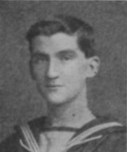

H Patterson had been working for the NER since 1910 and was an assistant guard when war broke out. It may be that his employment meant that his name did not feature on the roll of honour which relates specifically to the Locomotive Works. His fate was the same as the others however even though the location, Salonika in Northern Greece, was much more distant than the Western front.
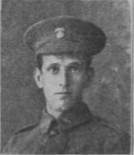
Railways and Mechanised Warfare
Those familiar with the changing technology of warfare will know of the importance of the railways for the nature of the conflicts that were waged from the 1860s onwards. The fact that the USA saw more casualties during the four years of its civil war than in the total of all the conflicts it has been involved in since is testament at least in part to the ability of the rail network to transport huge numbers relatively quickly. Sometimes this led to unexpected battles of massive size, such as Gettysburg in 1864, but by 1914 it merely facilitated the ongoing and seemingly inexhaustible demand for more and more troops. Most of the men from Heaton held relatively humble posts for the NER and in the military though some were able to bring their professional expertise to the cause of winning the war.
Leonard Tuberfield of the Royal Engineers and the 34th Broad Gauge Operating company ‘died of his wounds’ in Longueneuse, St Omer in September 1917. Those familiar with the geography of this area will know that St Omer is quite a way north of the frontline trenches. A former boarding school was being used as a military hospital. A German air raid on the night of 29 September saw 60 bombs dropped onto the area including onto a marquee full of wounded soldiers. Leonard was one of a number of servicemen, nurses and civilians to lose their life.
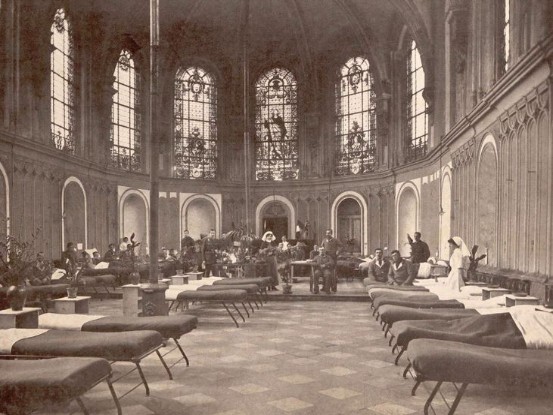
Another sapper belonging to the Royal Engineers was John Stephenson who in the 1911 Census is living in the city centre and employed as an ‘engine cleaner’ at the locomotive works. He is buried at St Pierre Cemetery, Amiens.
The NER ‘Pals’ battalion that was raised in September 1914 was unique in being composed of workers from one company. It served as the 17th Northumberland Fusiliers providing skilled engineering and manual labour to the GHQ Railway Construction troops.

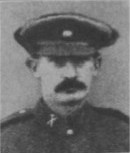
Only one of our Heaton railway workers gained any particular recognition over the course of the conflict. Albert E Pollard, who in 1911 was living with his family in Tynemouth, was a Regimental Sergeant Major with the Royal Scots Fusiliers. He lost his life on the opening day of the third battle of Ypres, often called Passchendaele. One can imagine him leading his men across the open ground at Pilckem Ridge, perhaps with a piper by his side. He was awarded the Military Medal for ‘conspicuous gallantry’ and is remembered on the Menin Gate.

The remainder of our group of fallen soldiers display a common level of heroism and sacrifice in the context of ordinary lives. We are told that 24 year old A R Douglas lost his life ‘aboard ship’ in September 1917. He had worked as a clerk in the passenger department at Heaton station since 1908.
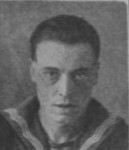

William Crawford, an able seaman in the Volunteer Reserve, is commemorated on the Arras memorial for his sacrifice at the age of 23. Edward Strange worked at the Locomotive Depot and was a member of the Durham Light Infantry until April 1918. Matthew William Douglas of Gateshead had risen to the rank of Lance Corporal in the Northumberland Fusiliers. He is remembered on the memorial at Pozieres. George Cavan of Malcolm Street in Heaton, where he lived with his two sisters, has his name inscribed at the Honourable Artillery Company Cemetery in Ecoust St Mein where is added, ‘Faithful unto Death.’
Celebration and remembrance
On 4th March 1920 a ‘Welcome Home’ dinner was held in the Collingwood restaurant in the Groat Market. The 100 people in attendance included Major J Smeddle, Mr Alex Wilkie MP as well as a number of Heaton railway managers and foreman. Major Smeddle said that he ‘was delighted to welcome them back from the front’. Out of the total of 470 men, 109 had joined the services whilst NER more generally had seen over 18,000 join the colours. A call was meant for the assembly to stand and ‘pay silent tribute to the boys who would not return’.
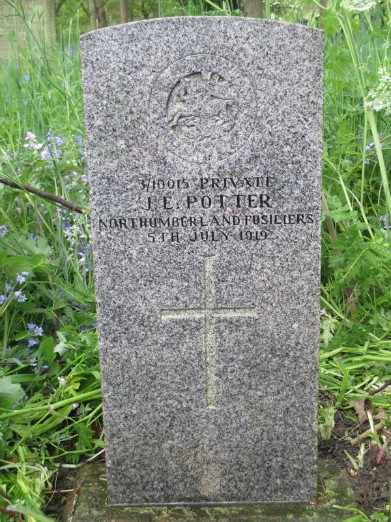
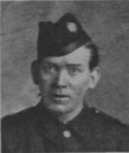
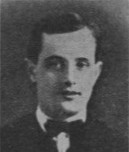
Whilst all these individuals seem lost to time, their stories, brief and broken in many cases, do further illustrate the scope and nature of the first world war. The variety in the photographs that we have hints at the aspects of their lives beyond the sad shared elements they have here. There are two names that do not feature on the roll of honour where we began our story but appear in the ‘North Eastern Railway Magazine’ in their regular record of the fallen. From 1915 onwards some names are merely added to the weekly appendix, as they arrived too late to be included within the text. The numbers were outstripping any determination to keep up to date.

What passing-bells for these who die as cattle?
— Only the monstrous anger of the guns.
Only the stuttering rifles’ rapid rattle
Can patter out their hasty orisons.
No mockeries now for them; no prayers nor bells;
Nor any voice of mourning save the choirs, —
The shrill, demented choirs of wailing shells;
And bugles calling for them from sad shires.
Wilfrid Owen ‘Anthem for Doomed Youth’
This piece cannot do justice to the variety of stories and lives lost. It may instead need to be content with sharing the common themes of sacrifice, heroism and the poignancy of such potential unfulfilled. There is however something in the individual style of the photographs that we still have that may allow us to imagine their particular personalities, identities and lives.
Can You Help?
If you know more about anyone mentioned in this article or have memories or photos to share, we’d love to hear from you. You can contact us either through this website by clicking on small speech bubble immediately below the article title or by emailing chris.jackson@heatonhistorygroup.org
Acknowledgements
Researched and written by Karl Cain of Heaton History Group.
Sources
Ancestry
Battle of the Somme Roll of Honour
British Newspaper Archive
Commonwealth War Graves Commission
The Great War (1914 – 1918) Forum https://www.greatwarforum.org/
‘Great War Railwaymen’ / Jeremy Higgins; Uniform Press Ltd, 2014
The Heaton Train Care Centre and its staff
Lives of the First World War IWM
The Lochnagar Crater Foundation
‘Newcastle Battalions in action on the Somme’ / Neil Storey and Fiona Kay; Tyne Bridge Publishing, 2016
‘The North Eastern Railway in the First World War’ / Rob Langham; Fonthill Media, 2013
‘North Eastern Railway Magazine’ 1914 – 1920
North East War Memorials Project
First published on 3 August 2026.


I read this with interest, having previously written an article about the Roll of Honour that appeared in Backtrack magazine in February 2024. This focussed more on the background to the making of the roll and its subsequent history so I’m grateful to Karl for fleshing that out with the stories of men commemorated in the memorial.
My interest in the Roll of Honour was sparked when a friend of mine was commissioned by Northern Trains to restore it. It had suffered from originally being kept outside on the wall of the Fitting Shop at Heaton Depot and then, later, displayed in a well-lit stairwell at the Depot. This led to significant deterioration and the extent of the damage was such that a decision was made to make a facsimile, which is the one on display, and store the original in a safe place.